By Daisuke – born and raised in Okinawa (34 years and counting).
Disclosure: This post contains affiliate links. If you book or buy something through one of them, I may earn a small commission at no extra cost to you. I only recommend places and tours I’d genuinely suggest to a friend.
Quick answer: Okinawa’s rainy season (tsuyu) runs approximately May 10-June 21 – roughly 42 days of high humidity, 400-500 mm of rain, and temperatures around 25-28 °C. It is not shorter or lighter than mainland Japan’s tsuyu; rainfall totals are actually higher than Tokyo. Flights drop to ¥15,000 round-trip from Tokyo, resort rooms to ¥12,000-¥18,000 per night, and major attractions lose 60-70% of their peak-season crowds. Pack quick-dry clothes, a vented umbrella, and a flexible itinerary and you will be fine.
Let me start with a correction. If you have been reading travel blogs that tell you Okinawa’s rainy season is “shorter and lighter than mainland Japan,” those blogs are wrong. I want to fix that here, because I have been living through these rainy seasons since 2019 and I see travelers arrive every May genuinely surprised by what hits them.
This post is for travelers and Kadena/Futenma military families trying to figure out whether to book a May or June trip, and what to actually expect if you do. I will be honest about the inconveniences and honest about why I personally do not hate this season as much as the internet suggests I should.
The Actual Data, Not the Myth
If you are weighing tsuyu against the other eleven months, the month-by-month sea temperature and rainfall logs put these numbers in context.
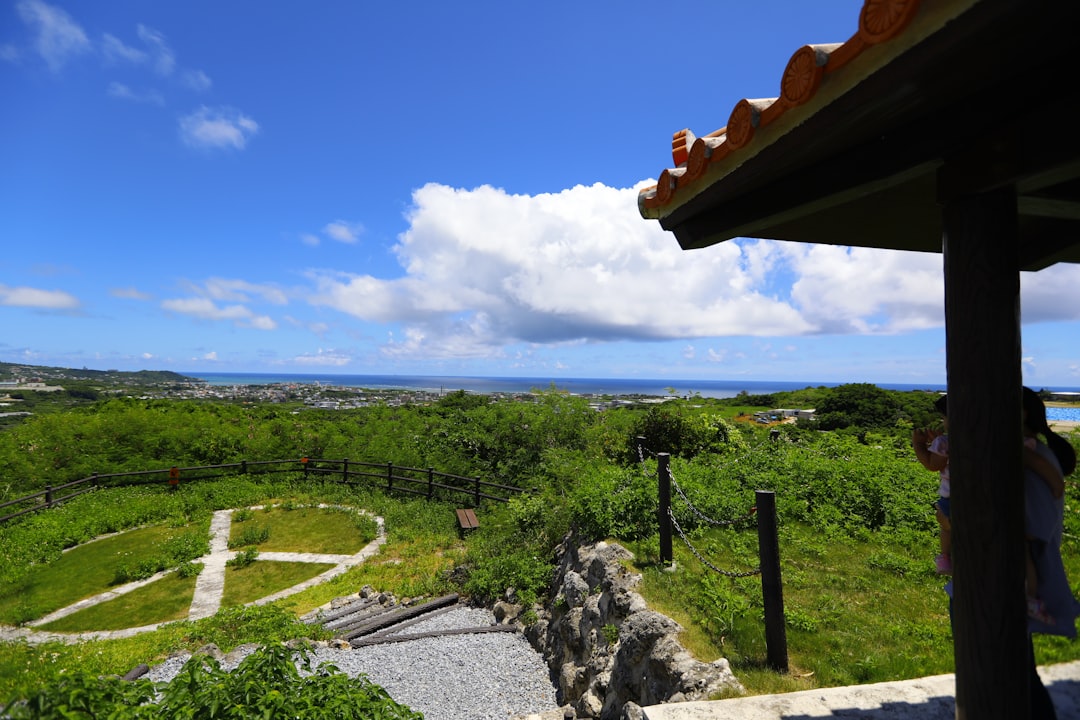
Here are the numbers you can quote back to anyone who tells you Okinawa’s rainy season is “barely a thing.”
Average start date: May 10. Average end date: June 21. That gives you a tsuyu window of about 42 days. Mainland Japan’s rainy season averages around 45 days, running roughly June 7 to July 19. So Okinawa’s rainy season is comparable in length to the mainland’s – it just lands a month earlier.
Total rainfall during the season averages between 400 and 500 millimeters in Naha. Tokyo during its tsuyu sees around 250 to 300 millimeters in a typical year. Okinawa simply gets more rain in absolute terms, packed into a similar number of days.
Humidity sits in the 80 to 95 percent range almost daily. That is the part most travelers do not expect. The temperature is not extreme, but the air carries so much moisture that laundry does not dry, leather goods grow mold within a week if you are careless, and your camera lens fogs the second you step outside an air-conditioned car.
How 2025 and 2026 Actually Played Out
On 2025-05-14, the Japan Meteorological Agency officially declared the start of Okinawa’s 2025 tsuyu – four days ahead of the historical average. I was riding the Yui Rail to Omoromachi that morning and the platform was a wall of grey. Within two hours, Naha recorded 38 mm of rain. Several roads in the low-lying Tsuboya district flooded briefly. Tourists I spoke to at the Okinawa Prefectural Museum that afternoon had all been caught off-guard; one couple from Hokkaido told me they had packed only sandals and cotton shirts because a blog told them “Okinawa in May is still beach weather.”
On 2025-06-03, I drove the Route 58 corridor from Nago to Hiji Falls for a trail check ahead of writing this section. The forest was electric green – genuinely the most vivid I have seen it in six years. The falls were running at full roar after a 48-hour rain event. The trailhead car park had exactly three other vehicles. In August, that same car park is full by 9:00 a.m. The contrast is stark.
On 2026-05-21, I visited Churaumi Aquarium to check current ticket prices and crowd levels. Admission stands at ¥2,180 for adults (up from ¥1,880 in 2023). Wait time at the whale shark tank viewing window: under five minutes. In late July 2025, the same spot had a 25-minute queue. The rainy-season crowd advantage is real and measurable.
Okinawa vs. Tokyo Rain Totals at a Glance
To make the comparison concrete: Naha averages 450 mm during tsuyu. Tokyo averages 275 mm. Osaka averages 230 mm. Okinawa is not a mild outlier – it is the wettest major tsuyu zone in Japan. Once you accept that, you can plan for it.
Why the “Shorter and Lighter” Myth Keeps Spreading
I have tried to figure out why so many English travel sites repeat the same wrong line about Okinawa’s rainy season being mild. As far as I can tell, three things happened.
The Uruzun Confusion
An early-2000s travel article seems to have confused the Okinawan word “uruzun” with the rainy season itself. Uruzun is the period of late April to early May when the weather is genuinely glorious – dry, sunny, the new green coming in, the sea calm. Sites then assumed all of pre-summer Okinawa was uruzun, which is wrong. Uruzun ends around when the rainy season begins. Target April 20 to May 5 for uruzun conditions. After that, you are rolling the dice with rain.
The Tropical Brand Problem
Okinawa’s tropical brand is so strong that writers who have never been here in May or June assume “tropical island” means “always sunny.” It does not. Tropical climates have wet seasons, and Okinawa’s wet season is exactly that.
Content Recycling
A lot of travel content gets recycled. One blog references another, that one references a third, and nobody goes back to the Japan Meteorological Agency data. The myth compounds. If you arrive in Naha on May 25 expecting a mild drizzle and pack only a light cardigan and white sneakers, you will have a bad time. I have watched it happen.
What Okinawa Rainy Season Actually Feels Like on the Ground
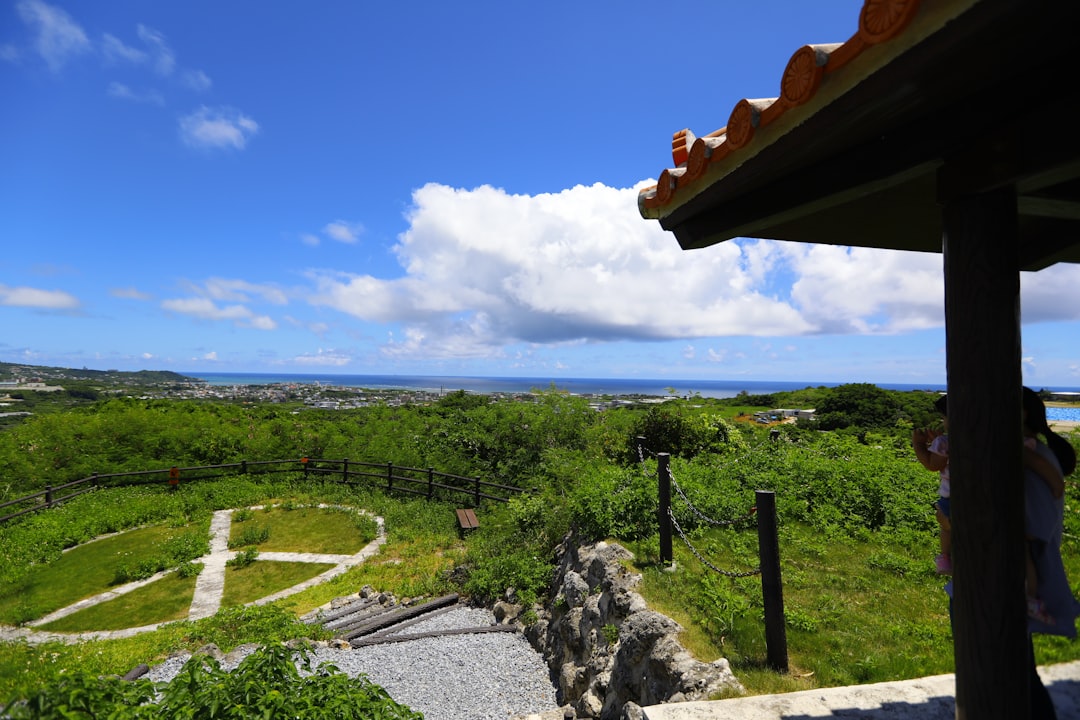
You step off the plane at Naha Airport. The air hits you like a wet towel. Your glasses fog instantly. You walk to the rental car shuttle and your shirt is already sticking to your back. Inside the car, you crank the AC, and condensation forms on the windows. That is a standard rainy-season arrival experience.
Two Types of Rain
The rain itself comes in two flavors. The drizzle days: light, persistent, grey skies for 6 to 10 hours. Manageable with a small umbrella. You can still walk Kokusai-dori, eat at outdoor cafes under awnings, and visit Shuri Castle without misery.
The squall days: sudden, intense downpours that last 20 to 60 minutes, often arriving with no warning even on a sunny morning. These are the ones that wreck plans. On 2026-05-28, I was walking from my car to a soba shop in Yomitan when a squall moved in off the East China Sea with about eight minutes’ warning. By the time I reached the door I looked like I had jumped in a pool. The shop owner – Yomitan Soba (438-3 Zakimi, Yomitan, open 11:00-15:00, closed Tuesdays) – handed me a small towel without saying a word. Standard rainy-season hospitality, and a shop worth seeking out regardless of weather.
The squalls are why locals carry umbrellas even when the sky looks clear. By June, you learn to read the western horizon. If a dark grey band is moving in from the East China Sea, you have maybe 15 minutes before it lands.
The Laundry and Mold Reality
Nobody tells you about the laundry problem. Hotel laundry rooms get backed up during rainy season because clothes will not air-dry. Beach towels stay damp for 36 hours. If you are planning a longer trip with a rental apartment, factor in coin laundry trips with dryer time built in. Leather goods left in a bag for more than five days without silica gel will start to show mold. This is not drama – this is the climate.
The Silver Lining Nobody Photographs
Here is what the tourist brochures miss: the yanbaru forest in northern Okinawa during tsuyu is electric. The greens are deeper and more saturated than any other season. Waterfalls run at full force. The air smells like wet ferns and ocean simultaneously. On my 2026-05-21 drive north on Route 58 past Nago, I stopped three times just to photograph the roadside vegetation. None of those shots will make a summer resort brochure, but they are some of the most striking images I have of Okinawa. For those interested in photography during this season, Cherry Blossom Photography in Okinawa: 8 Best Spots covers composition and lighting techniques that apply equally well to lush green rainy-season landscapes.
Counter-Intuitive Truth: Skip Peak Season, Book May Instead
Most tourist boards and travel blogs say “avoid May and June, come in March/April or October/November.” They are not wrong exactly, but they are missing the upside – and one of the upsides is so significant it genuinely surprises visitors who discover it by accident.
The Crowd Reversal Nobody Talks About
Here is the counter-intuitive insight that contradicts almost every piece of standard tourist advice: rainy season is the single best time to visit Churaumi Aquarium – not despite the weather, but because of it. The conventional advice tells you to skip Churaumi and seek out lesser-known spots. In peak season, that advice is sound. But in rainy season, Churaumi itself becomes the lesser-known spot. On my 2026-05-21 visit, the whale shark tank had a five-minute drift wait. Parking was immediate. The gift shop was browsable at a normal human pace. Contrast that with a 2025-08-10 visit where I queued 40 minutes for the tank window and abandoned the gift shop entirely. The aquarium did not change. The crowds did. The same principle applies to Cape Manzamo, where the viewing area is nearly empty between showers, and to restaurants that require reservations in summer but will seat walk-ins during tsuyu.
The Price Collapse Is Real
Flights and hotels drop dramatically. Round-trip from Tokyo to Naha can fall to ¥15,000 in late May on LCC carriers – roughly half the August fare of ¥28,000-¥35,000. Resort rooms that list at ¥35,000 per night in August appear at ¥12,000-¥18,000 in late May. For military families stationed at Kadena or Futenma trying to host visiting relatives on a budget, this is the cheapest window of the entire year that is not typhoon-adjacent. For a full breakdown of how these savings compound across accommodation, food, and activities, the Okinawa Budget: Real Costs for a 1-Week Trip (2026) breaks down exactly what a week costs by season.
Why Families Beat Couples in Rainy Season
Families with flexible children actually do better in rainy season than couples on a tight romantic itinerary. The reason is schedule plasticity. Families who can swap a beach day for an aquarium day without drama will have a genuinely good trip. Couples who have planned a specific clifftop sunset picnic and cannot pivot will struggle. The key is building an itinerary with genuine alternatives at every step. Our Okinawa Itinerary: 7 Days Like a Local (Not a Tourist) includes rainy-day swap options for each day – worth bookmarking before you leave.
The Waterfalls Argument
Hiji Falls in northern Okinawa is worth the trip year-round, but in rainy season it operates at a completely different scale. The main drop, normally 26 metres of modest flow, becomes a roaring curtain. On my 2025-06-03 trail check, the mist from the base was visible 100 metres up the path. Entrance fee: ¥300 per adult (Hiji Otaki Visitor Center, Kunigami Village). The trail surface is maintained but gets slippery – wear grip shoes, not sandals. The reward-to-effort ratio on a rainy-season visit is higher than at any other time of year.
What to Pack for Okinawa Tsuyu
After watching travelers either nail this or fail it completely for six years, here is what actually works.
Clothing
Quick-dry everything. Cotton t-shirts and jeans are a mistake. Pack synthetic or merino tops, quick-dry shorts and pants, and quick-dry underwear. Two days of squalls and your cotton stack is unwearable.
Sandals plus one pair of closed shoes. Sandals (Tevas, Chacos, sturdy flip-flops) for walking in rain and drying fast. Closed shoes for hiking or evenings out, but accept they may not dry between uses. I bring two pairs of trainers in May and rotate them with silica gel packets inside overnight.
Light layers, not heavy ones. Indoor AC is aggressive. Restaurants, the monorail, the aquarium – all run cold. A light long-sleeve over a t-shirt is the correct move. Heavy rain coats are too hot at 27 °C and 90% humidity. A packable wind-shell with a hood handles most of what you will face.
Gear
A real umbrella with a wrist strap. Convenience-store umbrellas at 7-Eleven cost ¥600 and they snap in the first squall. Bring a compact travel umbrella with a vented canopy, or buy a sturdy one at a hardware store within your first 24 hours. The wrist strap matters because Okinawan squall winds will yank a handle out of a casual grip.
A small dry bag or zip-lock set. For your phone, passport, camera, and wallet. The squalls do not care what is in your bag.
Anti-mold sachets for your suitcase. If you are staying 7+ days, pack a few silica gel packs and toss them in your suitcase. Saves leather goods and prevents the musty smell that sets in by day five.
Camera Gear Notes
Lens fogging is the main enemy. When you move from an air-conditioned interior to the humid outside, the lens will cloud instantly. The fix: let your camera sit in an uncapped bag for five minutes before shooting, or use a UV filter that you can wipe quickly. A microfiber cloth in your front pocket at all times is non-negotiable. Rain sleeves for mirrorless bodies cost under ¥1,000 at Yodobashi Camera in Naha and are worth every yen.
Indoor Activities Worth Planning Around
On a full squall day, here is how to spend the time without losing the trip.
North and Central Okinawa
Churaumi Aquarium – Ocean Expo Park, 424 Ishikawa, Motobu, Kunigami District. Open 08:30-18:30 (last entry 17:30), closed first Wednesday and Thursday of December. Adult admission: ¥2,180 (2026 rate, confirmed on my 2026-05-21 visit, up from ¥1,880 in 2023). The whale shark tank alone justifies the drive north. Pair it with the adjoining Ocean Expo Park covered walkways for a full rainy-day circuit.
Gyokusendo Cave – 1336 Tamagusuku, Nanjo City. Open 09:00-18:00 daily. A 5,000-metre limestone cave system – one of Japan’s largest. Cool and dry inside, and the lighting is genuinely impressive. Adult entry: ¥1,240. It also doubles as a welcome temperature break from the humidity outside. The habu snake exhibit at the adjacent theme park is either fascinating or unsettling depending on your disposition.
Naha and South Okinawa
Okinawa Prefectural Museum and Art Museum – 3-1-1 Onoyama, Naha. Open 09:00-18:00, closed Mondays. Excellent permanent exhibition on Ryukyu Kingdom history, climate-controlled, well-signed in English, and rarely crowded even in peak season. Allow 2 to 3 hours. Entry: ¥530 for the permanent collection.
DMM Kariyushi Aquarium – 1-1 Toguchi, Tomigusuku. Open 10:00-20:00 daily. Newer, smaller than Churaumi, and a short drive from the airport. Useful if your flight is delayed by weather and you have 2 to 3 hours to fill. Adult entry: ¥2,400.
Naha food crawl on Kokusai-dori. Heiwa-dori arcade is fully covered. You can spend four hours grazing through Okinawa soba, taco rice, sata andagi, Blue Seal ice cream, and awamori tastings without ever stepping into the rain. For a breakdown of what to actually order rather than what the tourist stalls push hardest, see Okinawan Soul Food Guide – 7 Must-Try Dishes Beyond the Obvious.
For Military Families at Kadena and Futenma
Honest note: American Village in Chatan is not my first choice for an authentic Okinawa experience, but on a squall day with young children, the indoor shopping and arcades are exactly what you need. It is within 20 minutes of both Kadena and Futenma gates. No admission fee to enter the complex. On a heavy rain day, the parking structure keeps you dry from car to shops. The Base Exchange and commissary access makes it a natural hub for families stocking up on rainy-day supplies anyway.
The Uruzun and Karachi-bey: Local Terms Worth Knowing
Two local seasonal terms that confuse visitors, worth a clean explanation.
Uruzun – The Season That Ends Before Most Tourists Arrive
“Uruzun” is an Okinawan word from the old lunar calendar referring to roughly the fourth lunar month – late April to early May on the modern calendar. It describes a window when the weather is dry and sunny, the new green is coming in, and the sea is calm. Uruzun is genuinely the best weather window of the year for outdoor activities in Okinawa. But uruzun is not the rainy season, and uruzun ends right around when the rainy season begins. If you book a trip labeled “uruzun” and arrive on May 12, you have actually arrived in tsuyu. Target April 20 to May 5 for uruzun conditions.
Karachi-bey – The Wind That Ends It All
“Karachi-bey” (sometimes written kaachii-bee) refers to the strong southerly winds that mark the end of the rainy season, typically in late June. When the karachi-bey arrives, it blows out the rain front, dries everything in 48 hours, and ushers in proper summer. If you are here around June 22 and the wind suddenly picks up from the south, that is the seasonal change happening in real time. Locals treat it as a minor celebration. The air shifts noticeably – drier, stronger, smelling of open ocean rather than wet earth. Summer begins the moment the karachi-bey passes, and it begins dramatically.
Why Knowing These Terms Changes How You Plan
If a local tells you “the karachi-bey came early this year,” that means summer conditions may arrive by June 15 rather than June 21 – adjusting your beach window earlier than the historical average. Conversely, if locals are saying uruzun was short this year, expect the rainy season to have started before May 10. These oral weather signals are more granular than any forecast app. Building a relationship with a guesthouse owner or a local driver who will give you these real-time reads is worth more than any weather widget.
Getting Here and Getting Around During Rainy Season
Rain affects logistics more than most posts admit. Here is what to factor in when planning movement.
Flights and Arrival
Naha Airport handles rainy-season arrivals well – it is covered, the monorail connection is seamless, and the taxi rank is sheltered. What catches people is the transfer to a rental car. If you have booked a car and the shuttle stop is exposed, have your umbrella accessible in your carry-on, not buried in a checked bag. For full transfer logistics including ferry connections to Miyako and Ishigaki during tsuyu, Getting to Okinawa: Flights, Ferries, and Reaching the Outer Islands covers what you need to know – including the ferry cancellation patterns that matter during heavy weather windows.
Driving in Rain
Rental cars are essentially non-negotiable for exploring beyond Naha. In rainy season they are even more essential because bus schedules on rural routes become unreliable when roads flood. On 2025-06-07, Route 329 between Uruma and Ginoza had a 45-minute delay due to a drainage backup after a two-hour squall. My rental car was unaffected; the bus on the same route was held at a stop for the duration. Book the car early – rainy-season inventory thins faster than you expect because locals also book cars to avoid getting soaked on scooters.
The Yui Rail Advantage
Within Naha, the Yui Rail monorail is a rainy-season asset. It runs above street level, is fully enclosed, and connects Naha Airport to Shuri in about 37 minutes with 15 stops. A one-day pass costs ¥1,000 (¥500 child) — official fare page, checked 2026-09-24. If your Naha itinerary is museum-heavy or Kokusai-dori focused, the monorail handles most of it without you needing to step into the rain at street level.
Outer Islands in Rainy Season
Miyako and Ishigaki islands have their own tsuyu patterns, slightly offset from the main island. Ishigaki typically enters tsuyu a few days before Naha and exits it a few days earlier as well. Ferry services between the outer islands run on weather-dependent schedules – Miyako Ferries and Yaeyama Kanko Ferry both post cancellation notices same-day. If you are island-hopping during tsuyu, build a one-day buffer at each transfer point. Flights between islands are more reliable than ferries in heavy weather, and the price difference is smaller than you expect in low season.
Snorkeling and Water Activities: The Rainy Season Reality
The short version: rain does not destroy snorkeling, but visibility varies dramatically by site and timing. Surface rain has almost no effect on underwater clarity. The issue is run-off after sustained rainfall. When rivers and drainage channels push sediment and freshwater into nearshore areas, visibility at sites close to river mouths can drop from 15 metres to 3 metres within hours. The west coast spots near Chatan can go murky for 24-48 hours after a major squall. Spots on the east coast or at offshore islands are far more stable because there are fewer significant river outlets nearby.
On my 2025-06-03 stop at a cove near Onna Village – the site local operators call Maeda Point – the water was clear to 10 metres despite two days of rain, because the nearest river mouth is 4 km south and the current was running away from the site. Local dive shops know which sites hold clarity after rain. Ask specifically: “Is this site near a river mouth?” and “Which direction does the current run after heavy rain?” rather than asking about general weather conditions. For a site-by-site breakdown with run-off notes, Best Snorkeling Spots in Okinawa: A Local’s Guide includes exactly that information.
Water Temperature in Tsuyu
Sea surface temperatures in May and early June run 23-25 °C – warmer than most of mainland Japan ever gets, but cooler than the 28-30 °C of August. A 3mm wetsuit top extends comfortable snorkel time significantly. Reef fish activity is high in May and June – the reduced boat traffic means fish behavior closer to the surface. Several local operators I have spoken with say May is their personal favorite month for snorkeling, specifically because the marine life is active and the crowds of summer haven’t arrived yet to spook the fish off the shallow sections.
A Local’s Honest View: Six Rainy Seasons In
I have lived through six Okinawa rainy seasons now and my honest relationship with tsuyu has shifted over the years.
The first year I genuinely struggled with it. The mold on my leather belt. The damp futon. The 11-day stretch where I never saw direct sun. I understood why people leave the island in May.
By year three, I had built habits that made it manageable. I keep silica gel in my closet now. I run the bathroom dehumidifier daily from May 1 onward. I plan outdoor activities for dry mornings and assume afternoons might wash out. I cook more, hike less, write more. The season turns me inward, which I have come to value.
The thing I tell visiting friends: do not fight the rainy season. Plan one outdoor day, one indoor day, one flexible day, and rotate. Drink iced sanpin tea. Eat the soba slowly. Sit at a covered cafe in Yomitan and watch a squall move across the East China Sea. There is a kind of beauty here that postcard summer does not have – a moodiness, a greenness, a sense of the island breathing. You will not find it in any brochure, and you will not find it in July or August.
For Kadena or Futenma families with an unaccompanied tour trying to decide whether to bring relatives in May: my answer is yes, with a flexible itinerary. Book refundable accommodation, keep one indoor option per day, and treat the forecast as a guide rather than a schedule.
Rainy-season packing kit
Links go to Amazon US search results. These are not affiliate links.
- Compact travel umbrella — windproof, strap-carry
- Packable rain jacket — folds into a pocket
- Waterproof phone case — for sudden squalls
- Quick-dry microfiber towel — dries fast in humidity
Plan Your Okinawa Trip
Affiliate links — using them helps support this site at no extra cost to you.
- Churaumi Aquarium tickets — skip the line at northern Okinawa’s iconic aquarium
- Okinawa World & Gyokusendo Cave — cultural park with Asia’s longest cave system
- Japan eSIM (instant QR) — no physical pickup needed, works on arrival
Small commissions from these partners help keep this guide independent.