The Honest Okinawa Guide for US Military Families
If you’ve just got orders to Okinawa — congratulations. You drew the long straw. This island is one of the best PCS destinations in the world, and the next two-to-four years can either pass in a blur of base life and Costco runs, or become the chapter of your life you talk about forever.
This guide is for the second outcome.
On this page
- The 30-day plan: what to do in your first month
- Off-base food worth leaving the gate for
- Beaches: the public ones locals use
- Weekend trip ideas (1-day, overnight, holiday)
- Practical: phones, banking, schools, healthcare
- Mental setup: making this work
The 30-day plan: what to do in your first month
Most people I talk to wish they’d done these things in week one, not month six. The sooner you establish routines outside the base, the faster Okinawa stops feeling foreign and starts feeling like home.
Week 1: Logistics
- Get a Japanese phone or eSIM (Ubigi or IIJmio give you native rates that beat military hotspots).
- Open a Japanese bank account if you’ll be here >12 months — Japan Post and Shogin (Bank of Okinawa) are the standard options.
- Get the PiPi card (the local IC card) for the Naha monorail.
- Download these apps: Google Translate with offline Japanese, NAVITIME (way better than Google Maps for Japan public transport), GoToBus / Okinawa Bus for off-base bus routes, and Tabelog instead of Yelp Japan (in Japanese, but star ratings translate).
Week 2: Drive the island
- Take a single day, rent or use the family car, drive Highway 58 from Naha to Yanbaru (the northern third). Pull over wherever it looks pretty. Do not plan it.
- Find your “off-base food spot” — the local izakaya, soba shop, or curry place that becomes your default for the next 2 years.
When I drove past the Yanbaru coast for the first time as a newcomer, I understood why people actually stay in Okinawa. Highway 58 is the fastest way to stop seeing this place as a duty station and start seeing it as somewhere you belong.
Week 3: Get social
- The base community has Facebook groups for everything (Toy Library, hiking, scuba, photography). Join 3.
- Find a local-meets-military hangout — Mihama American Village is accessible, but quieter spots are better (more on this below).
Week 4: Plan the first big trip
- Book a weekend on Ishigaki, Miyako, or the Kerama Islands. Don’t wait. The good resort rooms book 2–3 months ahead.
Off-base food worth leaving the gate for
Yes, the Habu Box and the Awase Meat Market are good. But here’s what regulars know: the best meals happen in places without English menus or military families. The following spots deliver something you won’t find on base.
Naha (worth the drive)
- Daiichi Makishi Public Market — buy fresh seafood downstairs, take it upstairs to be cooked for ¥500/dish. Tourist-y but locals still go.
- Yotsutake in Kokusai-dori area — okinawa-soba better than any base spot.
Yomitan / Chatan (closer to Foster/Kadena)
- Hamabe no Chaya in Nanjo — afternoon coffee on cliffs over the ocean. Take your spouse.
- Chura Shima Shokudo — soba shop in Yomitan; ¥800 lunch, line out the door at noon.
- Yagaji Cafe — slightly remote, the cafe everyone wishes they’d found in month one.
Onna / Yanbaru (north)
- Pizza in the Sky — yes, it’s an institution. Yes, you should go anyway. Sunset reservation only.
- Goya World in Naha — a museum-restaurant for goya (bitter melon). Either you’ll love it or hate it. Either is fine.
Don’t overlook
- The Yomitan Saturday morning farmer’s market (Yutaka-ichi) — best place to learn what’s actually in season here.
Beaches: the public ones locals use
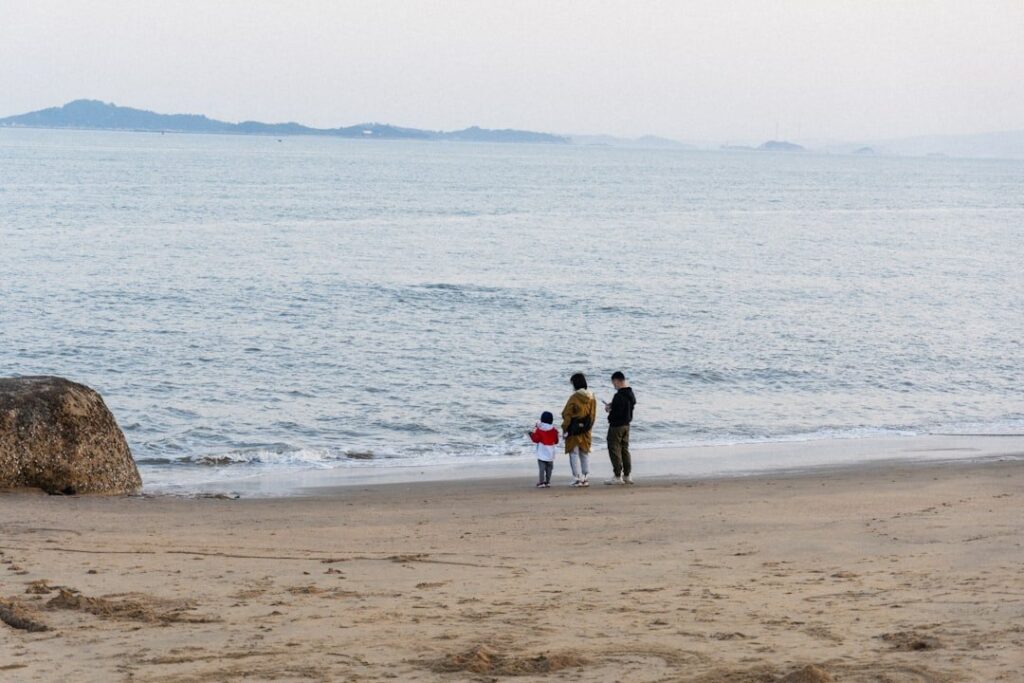
Most newcomers go to Manza Beach Resort, Sunmarina Beach, or stick to Sunabe Seawall. These are solid, but here’s what to add to the rotation for quieter swimming and fewer military families on weekends.
Free public beaches (no entrance fee)
- Ginowan Tropical Beach — short drive from Foster, basic facilities, less crowded weekday afternoons.
- Bise Fukugi Tree Road & Beach — north, pristine, drive through a fukugi tree canopy first.
- Yagaji Beach (Henoko area) — tiny, often empty, locals only.
Worth the entrance fee
- Mihama Beach — works for short kid trips.
- Cape Maeda — the launching point for the famous Blue Cave swim. Pay the parking, walk down, snorkel out.
Where the locals actually go on weekends
- Aharen Beach (Tokashiki Island) — 35-minute ferry from Naha, day trip possible.
- Furuzamami Beach (Zamami Island) — 50-minute ferry, the water that ends up on Okinawa postcards.
Weekend trip ideas
One-day trips
- Tokashiki Island snorkel day (ferry from Naha)
- Yanbaru hike — Hiji Falls or Daisekirinzan
- Kouri Bridge drive + Heart Rock photo
Overnight
- Ishigaki Island for snorkeling (1-hour flight from Naha)
- Miyako Island for beaches (1-hour flight)
- Kume Island — slightly less famous, same level of beautiful
Long weekend / holiday
- Iriomote — Japan’s jungle island with hiking and river tours
- Taipei (Taiwan) — 90-minute flight from Naha, 4-day trips routinely under $400 per person if you book ahead
Practical stuff
Phones
- Military hotspots (military-issued mobile) are convenient but slow off-base.
- Get a local eSIM: IIJmio, Ubigi, or povo. ¥1,000–3,000/month, way better speed.
Banking
- Stay on a US bank for paychecks if you can — the FX hassle isn’t worth it short-term.
- Open a Japanese account only if you’ll be paying off-base utilities or rent (post office bank works).
Schools
- DoDEA elementary on base. The middle/high schools depend on your base.
- International School of Okinawa if you want off-base options.
Healthcare
- Stick to TRICARE on-base for routine. For specialists or emergency, Okinawa Chubu Hospital (English-speaking floor) is the go-to.
Transportation
- Buy a car within month 1. Used Japanese kei cars are cheap and run forever.
- The Camp Foster vehicle inspection (JCI) saves you from learning Japanese DMV procedures.
Mental setup: making this work
Here’s the honest part nobody puts in the welcome briefing:
- The first 60 days will feel long. Driving on the left, narrow roads, bilingual signs, base routine — all of it taxes you. Sleep more than usual.
- Your default is “stay on base.” It’s safer, easier, and full of friends. Resist it. Most of the regret I hear from departing families is “we didn’t go off-base enough.”
- Make the unfamiliar a habit, not a special trip. Once a week, eat at a restaurant where the menu is only in Japanese. Order something you can’t pronounce. You’ll get good at it.
- Travel within Asia is cheap from here. Tokyo, Seoul, Taipei, Shanghai are all 2–3 hour flights, often cheaper than CONUS travel within the US.
- Your social media looks like a brag book. That’s fine. Send the photos to your parents — your tour ends faster than you think.
A short list of things to do before you PCS out
So you don’t leave with regrets:
- [ ] Watch a sunset from Cape Manzamo at least once
- [ ] Eat at one izakaya where you’re the only American
- [ ] Take the Tokashiki ferry
- [ ] Drive to the Yanbaru rainforest and hike Hiji Falls
- [ ] Take a snorkel boat to the Kerama Islands
- [ ] Try awamori (responsibly)
- [ ] Visit Shuri Castle (post-fire reconstruction)
- [ ] See the Eisa drumming festival (late July to mid-August)
- [ ] Buy a shisa lion pair from a Yomitan pottery village
- [ ] Drive Highway 58 with the windows down
Questions, corrections, additions
If you’ve been here a while and your favorite spot isn’t on this list, send me a tip via the Contact page — this guide updates regularly.
If you’re PCSing in soon and have a specific question, message me on X. I usually reply within a day.
Welcome to Okinawa.
— Daisuke