Pick late October if the sea matters most to you, and early May if dry days and low prices matter more. That is the honest split between Okinawa’s two shoulder seasons. I’m Daisuke, born and raised in Okinawa (34 years and counting), and I run okinawa-insider.com. Most guides lump both windows together as off-peak and leave it there, which helps nobody who is actually choosing between a May flight and an October one. This compares them on water temperature, rain normals, typhoon odds, crowd type, pricing, and what is still operating.
This post contains affiliate links. If you book a tour or buy through them, I may earn a commission at no extra cost to you.
What counts as Okinawa’s shoulder season, and which two windows do locals actually mean?
When people here talk about the good weeks, they mean roughly 7–20 May and roughly 15 October–5 November. Both sit outside peak summer, and both are defined by a weather boundary rather than by a school calendar.
The May window is the gap between the end of Golden Week and the start of tsuyu, the early rainy season. Golden Week 2026 runs 29 April to 6 May, with Wednesday 6 May as a substitute holiday, so domestic demand collapses from Thursday 7 May. The Japan Meteorological Agency puts the average tsuyu onset for the Okinawa region at around 10 May and the end at around 21 June. The average hides a lot: onset was declared around 21 May in 2024 and around 5 May in 2025. So the May window is real but it is a gamble with a published spread of about ten days either side.
The October window is the other side of summer, after the typhoon peak fades and before the north wind sets in around late November. It is more predictable and, in my opinion, the easier of the two to plan around if you only get one shot.
Which window has the warmer sea for swimming, early May or late October?
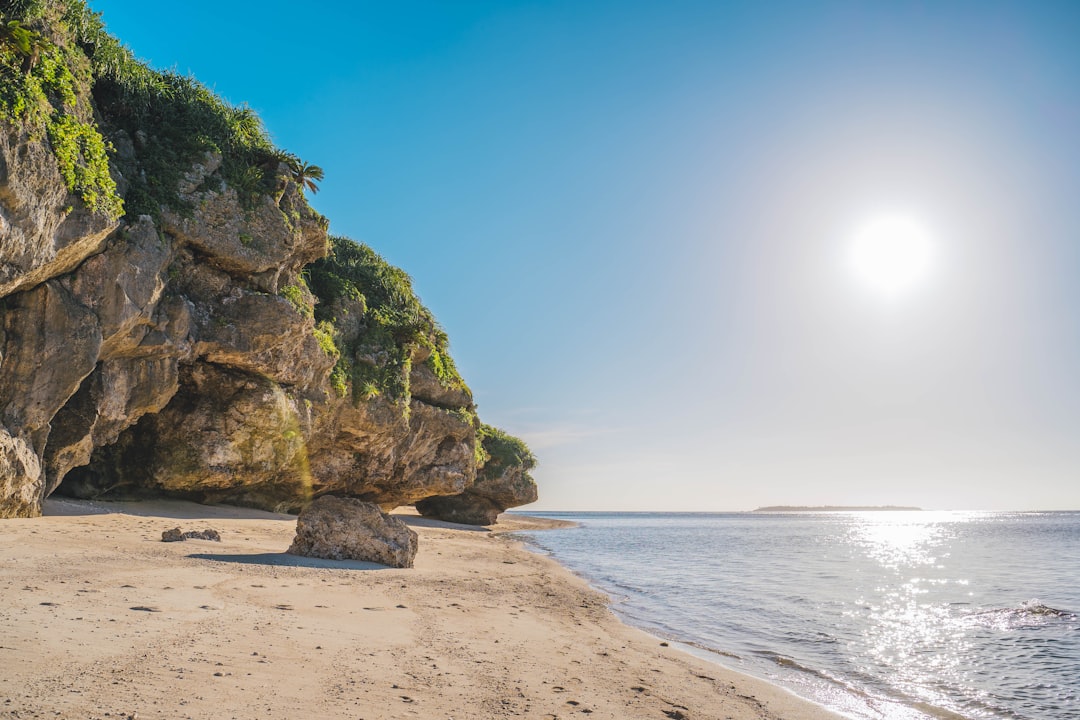
Late October, and it is not close. Coastal sea surface temperatures around Okinawa sit near 27°C in October and closer to 24–25°C in May, according to Japan Meteorological Agency coastal water temperature data. The ocean lags the air by roughly two months, so October water still carries August heat while May water is still catching up from winter.
This is the single most counter-intuitive thing about the two windows. Early May feels like the start of summer on land and the sea has not agreed yet. Late October feels like the end of summer on land and the sea is at its most comfortable of the two.
What that means in practice:
- Early May: fine for snorkelling with a shorty or a 3mm wetsuit. Most operators will hand you one without asking. Long, unhurried float sessions get cold.
- Late October: swimsuit and rash guard weather for most people, all day.
- Both windows: reef visibility is generally better than in mid-summer, because fewer boats and swimmers are stirring up the shallows.
Affiliate link: if you book through this, I may earn a small commission at no extra cost to you.
If a Blue Cave snorkeling tour at Maeda Point in Onna is the reason for your trip, October water will simply be more pleasant than May water.
How much rain should I plan for in early May compared with late October?
October is drier, and the gap is bigger than most people assume. Naha’s climate normals from the Japan Meteorological Agency (1991–2020) give 245.3 mm for May and 179.2 mm for October. For context, June averages 284.4 mm and September 275.2 mm, so October is the first genuinely calmer month after summer.
The more useful number is the ten-day breakdown for May at Naha. The first ten days average 57.5 mm, the middle ten days jump to 90.2 mm, and the final eleven days reach 97.6 mm. Almost all of May’s rainy reputation lives in the second half of the month. That is the real argument for the early-May window: you are not dodging May, you are dodging mid-May onward.
Rain here also behaves differently from mainland drizzle. A tsuyu front dumps hard for forty minutes and then the sky opens. An October shower is usually shorter still. Neither window produces the grey all-day rain you might be picturing from a Tokyo June. If your dates land after the 15th of May, read my Okinawa rainy season travel guide before you panic-cancel anything.
Is late October actually safe from typhoons?
No, and this is where a lot of shoulder-season advice is quietly wrong. The Japan Meteorological Agency’s typhoon approach normals for 1991–2020 give the Okinawa region 2.2 approaches in August, 1.9 in September, 1.5 in July and 1.1 in October. October still averages more approaches than June. The annual figure for Okinawa is 7.7, against 5.8 for the mainland.
What changes in late October is not the count so much as the behaviour. Autumn systems tend to track further east or recurve earlier, and they move faster once they do. A late-October storm is more likely to give you one scrubbed day than a three-day airport lockdown. That is a meaningful difference when you have a week.
Practical hedges that cost nothing:
- Keep the last full day free of anything paid and non-refundable.
- Book flights with a same-airline change policy rather than the cheapest non-changeable fare.
- Have one indoor backup per outdoor day. Museums and the aquarium stay open in rain, though not in a direct hit.
Early May carries almost no typhoon risk by comparison. My longer breakdown of how storms actually play out is in Okinawa typhoon season, real talk.
Are the crowds really smaller in these two windows?
Smaller than August, yes. Empty, no. And the type of crowd is completely different from what summer visitors describe.
Both windows collide with Japan’s school excursion seasons. Okinawa is one of the country’s main destinations for mainland school trips, and the two heaviest stretches are May and the October–December run. That means the aquarium, Okinawa World and the Peace Memorial Park can absorb several hundred students on an ordinary Tuesday morning while the beaches stay quiet. The crowd is concentrated in a narrow band of sites and a narrow band of hours, roughly 10:00 to 14:00 on weekdays.
Affiliate link: if you book through this, I may earn a small commission at no extra cost to you.
The fix is timing, not avoidance. Okinawa Churaumi Aquarium opens at 08:30 with standard closing at 18:30 and last entry at 17:30. Arriving at opening, or after 16:00, puts you out of phase with the buses. Buying Churaumi Aquarium tickets in advance skips the window queue, which is the part that actually stalls at 10:30.
One local calendar note for October: the Naha Great Tug-of-War fills central Naha hotels over the Sports Day long weekend, and Sports Day 2026 falls on Monday 12 October. Late October sits safely after it.
What do flights, rental cars and resorts cost in early May versus late October?
Early May has the sharper price cliff; late October has the steadier low rate. Domestic airfares and resort rates are priced against the Japanese holiday calendar, not against the weather, and that calendar is public.
Golden Week 2026 ends on Wednesday 6 May. Fares and room rates for Thursday 7 May onward are typically a different tier from the week before, which is why the post-Golden-Week fortnight is the cheapest genuinely warm stretch of the first half of the year. Late October sits in most resorts’ low or regular season band, with no national holiday spike after 12 October, so pricing is flat and boring in the best way.
A few cost realities that do not change between the two:
- A car is the real budget line. Okinawa car rental inventory tightens in both windows because domestic group travel books early.
- Churaumi’s official adult admission is ¥2,180, high school ¥1,440, elementary and junior high ¥710, free under six. That does not move seasonally.
- Cape Manzamo in Onna charges a small entrance fee of ¥100 for high school age and above. It is one of the few paid viewpoints worth the coin, and it takes twenty minutes, not an afternoon.
Affiliate link: if you book through this, I may earn a small commission at no extra cost to you.
What is still open and running in each window?
Nearly everything runs in both, with three real differences: lifeguarded beach season, wetsuit policy, and a handful of seasonal sites.
Most managed beaches on the main island run their supervised swimming season through to the end of October, then close the roped areas and pull the jellyfish nets. Late October catches the tail of that; early May is comfortably inside it. Unmanaged shoreline is open year round, but there is no lifeguard and no net, and box jellyfish advisories are posted through the warm months into autumn.
Kerama ferries from Tomari Port in Naha run all year. The high-speed Queen Zamami takes roughly 50–70 minutes to Zamami and the slower Ferry Zamami around two hours. Both cancel on swell rather than on rain, which is why an October low-pressure system can strand you on a sunny day.
Two honest misses. Kerama humpback whale watching is a winter and early-spring product, roughly January to early April, so neither window gets it. The hydrangea gardens in Motobu open from late May into June, which early-May travellers miss by about two weeks.
How do the two windows compare side by side?
Here is the whole argument in one place. The weather figures are Japan Meteorological Agency normals for 1991–2020 at Naha, and the typhoon figures are the agency’s approach normals for the Okinawa region over the same period.
| Factor | Early May (7–20 May) | Late October (15 Oct–5 Nov) |
|---|---|---|
| Sea temperature | About 24–25°C. Wetsuit or shorty for most people | About 27°C. Swimsuit comfortable |
| Monthly rain normal (Naha) | 245.3 mm for May, but only 57.5 mm falls in the first ten days | 179.2 mm for October |
| Typhoon approach normal | Effectively nil | 1.1 approaches in October, 0.3 in November |
| Main crowd type | Mainland school groups on weekdays; domestic couples | Mainland school groups; overseas independent travellers |
| Pricing | Sharp drop from Thursday 7 May after Golden Week | Steady low or regular season, no holiday spike after 12 October |
| Biggest risk | Tsuyu arriving early and eating your second week | One storm-scrubbed day and cancelled ferries |
| Daylight | Long evenings, sunset after 19:00 | Sunset before 18:00 by late October |
That daylight row decides more itineraries than people expect. In late October you lose about an hour of usable beach time at the end of the day, which matters if you are driving back south from Motobu.
Who should choose early May, and who should choose late October?
Choose early May if your trip is land-based and price-led. Choose late October if your trip is water-based.
Early May suits you if you want to hike Yanbaru in the north, drive the coast, eat your way through Naha, and treat the sea as scenery rather than as the activity. Temperatures are mild enough that a two-hour walk is not punishing, and the post-Golden-Week price drop is the steepest of the year outside winter. It also suits anyone travelling with older relatives who wilt in humidity.
Late October suits divers, snorkellers, families with confident swimmers, and anyone who has flown a long way specifically to be in the water. Warmer sea, drier month, softer light for photographs, and the last of the lifeguarded beach season. The trade is that you accept a one-in-several chance of a storm rearranging a day.
If you cannot swim or will not get in the water, honestly, October’s main advantage evaporates and early May wins on cost. If you are still weighing other months, my full month-by-month breakdown is in the best time to visit Okinawa.
What’s Easy to Get Wrong Here
The most common mistake is treating the shoulder season as one long safe period rather than two narrow windows with hard edges. The edges are what matter.
Four errors I see repeatedly:
- Booking 1–6 May and calling it shoulder season. That is Golden Week. It is the most expensive and most crowded week of the Okinawan spring, and rental cars sell out entirely.
- Assuming May water is warm because the air is. It is roughly 24–25°C. People book a long snorkel session and get out shivering after thirty minutes.
- Assuming October is typhoon-free. The approach normal is 1.1 for October. Buying a non-changeable fare to save ¥4,000 is a bad trade in that month.
- Planning a north-coast day without checking wind direction. The Blue Cave at Maeda Point and much of the west coast shelter well, but exposed headlands take autumn swell, and operators cancel on sea state rather than on the forecast icon.
Daisuke’s call: If you want one rule, book the week after Golden Week for a cheap land trip and the last two weeks of October for anything involving the sea.
What I’d do differently planning an Okinawa shoulder-season trip
I used to think the smart move was to squeeze into the first days of May, right on the edge of Golden Week, to catch the driest possible stretch. Looking at the ten-day rainfall normals for Naha, that logic does not hold up. The first ten days of May average 57.5 mm and the middle ten average 90.2 mm, which is a real difference, but the price difference between 5 May and 8 May is far larger than the weather difference. You pay peak-holiday rates to buy three marginally drier days.
The other thing I would change is the order of the itinerary. Most people put the aquarium and the north on day one because it is the headline, then keep beaches for later. In these two windows I would reverse it: take the sea and the ferries on your first clear day, because a good sea day is the perishable item. The aquarium, Shurijo Castle Park and the Naha food streets are all weather-proof and will still be there on the bad day.
Third change: I would stop treating Kokusai-dori as an evening plan. It is a souvenir corridor. Honestly, it is overrated, and the eating is better one street back.
Frequently asked questions
Can you swim in Okinawa in early May without a wetsuit?
Yes, but most people last about twenty to thirty minutes before getting cold, because coastal water sits near 24–25°C in May. Tour operators generally supply a shorty or 3mm suit for snorkelling trips at no extra cost. Short beach swims in the middle of the day are fine without one.
When does the rainy season actually start in Okinawa in 2026?
The Japan Meteorological Agency’s average onset for the Okinawa region is around 10 May, with the end around 21 June. Actual declarations vary widely, with onset around 21 May in 2024 and around 5 May in 2025. The agency announces the declaration in real time, so check it in the week before you travel rather than relying on the average.
Is the Churaumi Aquarium less crowded in the shoulder season?
Not reliably, because May and October are heavy months for mainland school excursions. Standard hours are 08:30 to 18:30 with last entry at 17:30, and adult admission is ¥2,180. Arriving at opening or after 16:00 puts you out of phase with the group buses.
Which shoulder window is better for a first trip to Okinawa?
Late October, for most first-timers. You get warmer water at around 27°C, a lower monthly rain normal than May at 179.2 mm for Naha, and flat pricing with no holiday spike after 12 October. Early May wins only if your trip is mostly on land and you are choosing on price.
About the author
I’m Daisuke. I’m born and raised in Okinawa (34 years and counting), and I write okinawa-insider.com in English because most of what gets published about this place in English is recycled from other English blogs rather than from anything on the ground here. I use Japan Meteorological Agency data and official operator pricing for the numbers, and I say plainly when something is not worth your time. If a figure on this site is wrong, tell me and I’ll fix it and date the correction.
Plan Your Okinawa Trip
These are affiliate links. If you book through them I may earn a commission at no extra cost to you.
- Okinawa car rental — book early for both windows; domestic group travel clears the fleet in May and October.
- Churaumi Aquarium tickets — skip the ticket window queue in Motobu; official adult rate is ¥2,180.
- Blue Cave snorkeling tour — Maeda Point in Onna, best value in the warmer late-October water.
Prices and hours listed here come from official operator sources and were correct at the time of writing in September 2026. Weather normals are Japan Meteorological Agency 1991–2020 figures for Naha and the Okinawa region. Always confirm on the operator’s own site before booking.
Read Next: Spoke Guides
- The best time to visit Okinawa, month by month
- Travelling Okinawa during tsuyu, the rainy season
- Okinawa typhoon season, real talk
Update Log
- 2026-09-21: First published.