By Daisuke — born and raised in Okinawa (34 years and counting).
You can scuba dive in Okinawa with no certification at all: dive shops run a supervised intro dive, called taiken daibingu in Japanese, which caps you at 12 metres with an instructor physically alongside you the whole time. I’m Daisuke, born and raised in Okinawa (34 years and counting). The trouble is that booking pages rarely explain the depth limit, the medical questionnaire that can disqualify you on the morning of the dive, the instructor-to-guest ratio you’re actually paying for, or the days when snorkelling the same site shows you more for roughly half the price.
This post contains affiliate links. If you book a tour or buy through them, I may earn a commission at no extra cost to you.
Can you scuba dive in Okinawa without a license?
Yes. Every major dive area on Okinawa Island runs introductory dives for people with zero training and zero certification card, under the PADI Discover Scuba Diving programme or its SSI, NAUI or JCUA equivalent. You sign a liability waiver and a medical questionnaire, get a 20 to 30 minute briefing, then dive with an instructor who stays within arm’s reach and usually controls your buoyancy for you.
What you don’t get is a certification. An intro dive doesn’t put a card in your wallet, doesn’t let you dive independently anywhere else, and doesn’t count toward your Open Water course unless the shop specifically credits it (some PADI shops will credit a Discover Scuba experience toward Open Water; ask before booking, not after).
Affiliate link: if you book through this, I may earn a small commission at no extra cost to you.
The most-booked option for first-timers is the Blue Cave at Cape Maeda in Onna Village, about 47 km north of Naha Airport, roughly an hour by car. Onna scuba diving at the Blue Cave is sold as a beginner-friendly product with English support, and most operators accept ages 10 and up with no upper age cap beyond a doctor’s note.
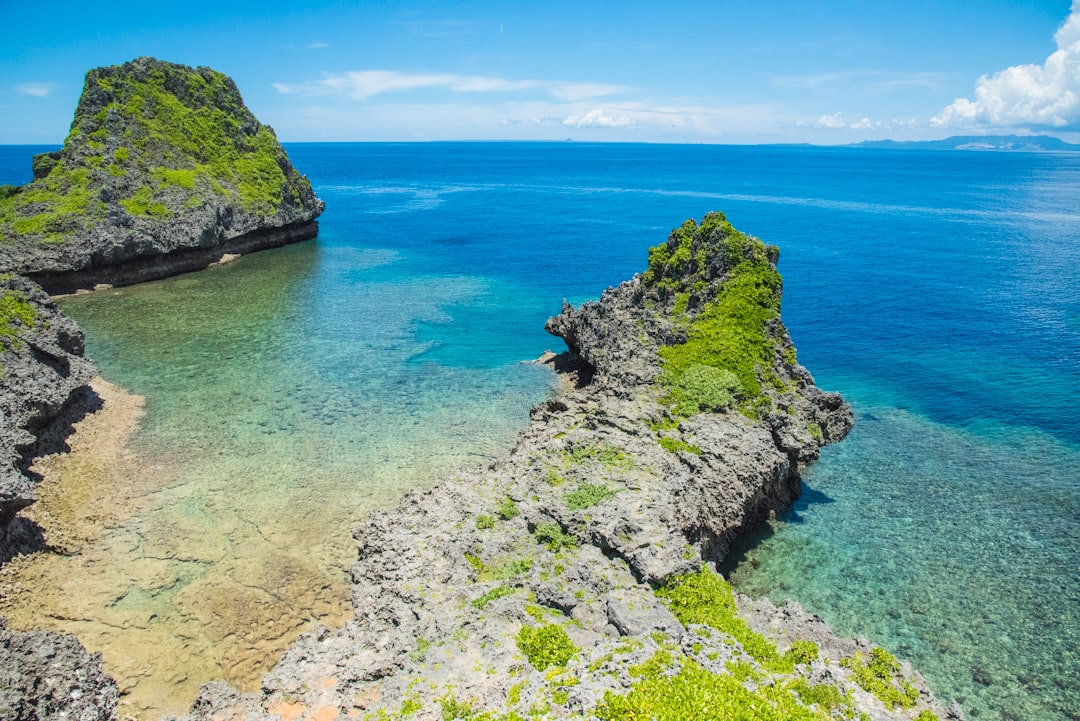
What is a taiken dive, and how does an Okinawa shop actually run one?
A taiken dive is a single guided dive of roughly 20 to 30 minutes underwater, wrapped inside a 2 to 3 hour total booking. The in-water part is short. The rest is paperwork, gear fitting, the briefing, the walk or boat ride to the entry, and the shower queue afterwards.
A typical Onna Village schedule looks like this: meeting time 30 minutes before the listed start, waiver and medical form at the counter, wetsuit change in separate men’s and women’s rooms, then a shore walk or a five-minute boat hop to the site. Shops at Cape Maeda run slots from around 08:00 through to a late-afternoon 15:30 departure, and the first slot of the day is the one with the calmest water and the shortest queue at the stairs.
Two things surprise people. First, you almost never do a pool session in Okinawa; the skills happen in shallow water at the site, standing depth, with mask clearing and regulator recovery practised in about five minutes. Second, most shops hold your hand or a strap on your BCD for the entire dive. You are a passenger, not a pilot.
How deep can you go on an intro dive, and how many people does one instructor take?
The hard ceiling is 12 metres. Under PADI standards, the confined-water skills portion of Discover Scuba Diving is limited to 6 metres, and the optional open-water dive tops out at 12 metres (40 feet) when it’s conducted by a full instructor; a divemaster with the DSD Leadership rating can only run the shallow portion. In practice, most Okinawa intro dives at the Blue Cave sit between 4 and 8 metres, because that’s where the light and the fish are.
Ratios matter more than depth. PADI caps a first open-water dive with beginners at 4 students per instructor, and 6 with a certified assistant. Plenty of Okinawa shops market 1:2 as their selling point, and some private plans run 1:1. Pay for the smaller number if you’re nervous or bringing a child.
Here’s the part nobody mentions on the booking page: at 4:1 in a busy cave mouth, your instructor is managing three other people’s buoyancy while you’re trying to equalise. If your ears are slow, a 1:2 or private booking is worth the extra few thousand yen, not because the dive is dangerous, but because a rushed descent is what ruins first dives.
What does the English briefing actually cover before you get in the water?
A proper English briefing at an Okinawa shop runs about 15 to 25 minutes and covers five things: equalising, breathing, hand signals, what to do if your mask floods, and how the instructor will physically hold you. Shops that advertise English support usually have at least one staff member who guides in English, but the safety talk may be delivered from a laminated card with diagrams rather than free conversation.
The hand signals you’ll be given are the standard set: OK, up, down, problem, ear trouble, and out of air. The ear-trouble signal is the one you’ll actually use. Instructors here teach you to pinch and blow gently every 50 cm on the way down, and to signal early rather than push through pain.
You’ll also be told not to touch anything. Cape Maeda’s reef edge has fire coral and sea urchins near the entry stairs, and the standard briefing includes keeping your fins off the bottom.
If your group has mixed languages, ask at booking whether the English briefing is separate or translated on the fly. A translated-on-the-fly briefing in a group of ten Japanese guests gets thin fast.
What’s on the dive medical questionnaire, and what gets you turned away?
Okinawa shops use the standard RSTC Diver Medical Participant Questionnaire, the same form used worldwide. The first page is a short block of yes-or-no questions covering heart and lung conditions, asthma, ear and sinus surgery, diabetes, seizures, pregnancy, and current medication. A single yes sends you to a follow-up box, and some follow-up answers require a physician’s sign-off before you can dive.
That physician’s sign-off is the trap. Getting a Japanese doctor to write a dive-fitness letter in English, on a holiday timetable, in Onna Village, is realistically a lost day. If you have asthma, a heart condition, uncontrolled high blood pressure, or ear surgery in your history, download the form and get it signed at home before you fly. Shops will not waive it, and they will not refund you at the counter for it.
Other common disqualifiers people don’t expect: being visibly hungover or having drunk alcohol that morning, pregnancy at any stage, and a heavy cold that stops you equalising. Age minimum is 10 for PADI Discover Scuba Diving, with no upper limit set by the agency, though individual Okinawa operators often add their own cap around 60 to 65 with a doctor’s note.
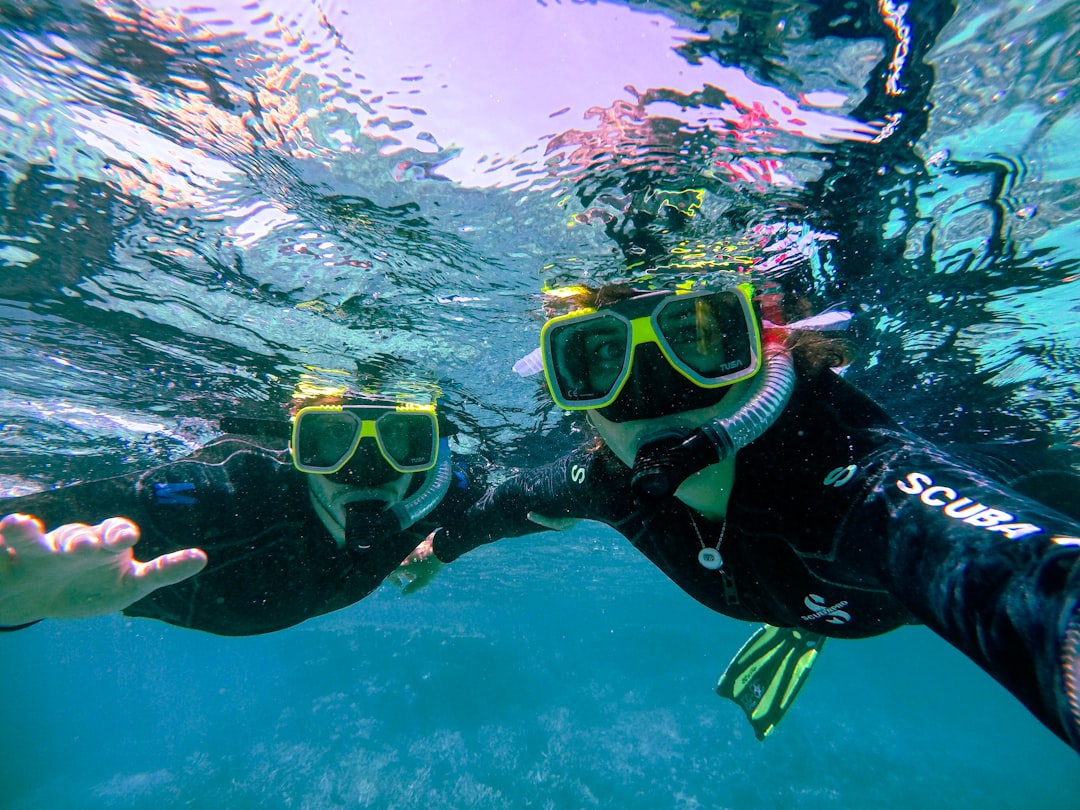
Blue Cave beach entry or boat entry: which intro dive should you book?
Beach entry is cheaper and boat entry is calmer, and the deciding factor is whether you get seasick or hate stairs. Beach entry means walking down the concrete steps at Cape Maeda in full gear and surface-swimming roughly 100 to 150 metres to the cave mouth. Boat entry means a five-minute ride from a nearby fishing port and a giant-stride or ladder entry right at the cave, with no walking in gear at all.
Cape Maeda’s managed area posts hours of roughly 8:30 to 17:30, parking is ¥100 per hour for about 180 cars, showers are ¥200 for 2 minutes, coin lockers ¥100 and hairdryers ¥100, per the Cape Maeda office facility listing. Boat-entry shops usually include their own showers and free parking at the shop, which quietly removes ¥400 to ¥600 of nickel-and-dime cost.
| Option | Typical listed price (2026) | Physical demand | Best for |
|---|---|---|---|
| Blue Cave beach-entry intro dive | ¥8,000–¥12,000 per person | Stairs in gear, 100–150 m surface swim | Confident swimmers, budget bookings |
| Blue Cave boat-entry intro dive | ¥11,000–¥16,000 per person | Low; short boat ride, no walking in gear | Weak swimmers, families, summer crowds |
| Blue Cave snorkelling | ¥3,000–¥6,000 per person | Low; life jacket provided | Under-10s, non-swimmers, tight budgets |
| Kerama Islands boat intro dive (day trip from Tomari) | ¥15,000–¥25,000 plus ferry | Full day, ferry ride each way | Better visibility, fewer people per site |
Affiliate link: if you book through this, I may earn a small commission at no extra cost to you.
Compare live inventory on the Blue Cave snorkelling and diving experience page, and check the Onna Village scuba and snorkel option for boat-based slots.
What will you actually see on an intro dive at Cape Maeda?
Expect a lot of small reef fish and one genuinely good visual: the cave interior lit blue from below. The blue comes from sunlight entering the water outside and reflecting off the pale sand floor back into the cave, so it peaks when the sun is high, roughly 10:00 to 14:00, and it looks flat and grey under heavy cloud.
Realistic species list: sergeant majors and other damselfish in dense clouds around the cave mouth (the shops feed them, which is why they swarm), butterflyfish, parrotfish, wrasse, the occasional moray in a crack, and sea urchins on the rock. Turtles are possible but not routine at the cave itself; you have better odds on the outer reef sections and at other Onna sites.
What you won’t see on a 12-metre intro dive: manta rays, big schooling pelagics, or the dramatic coral gardens people picture from the Kerama Islands. Keramashoto became a national park in 2014 largely because the water and coral out there are a step above the main island’s west coast, and a day boat from Tomari Port is the honest answer if reef quality is your priority.
When is snorkelling honestly the better buy than an intro dive?
Snorkelling wins whenever the main attraction is the cave itself, and it wins on price by a wide margin. The blue glow at Cape Maeda is a surface-light effect; you see it best floating just under the surface looking into and up through the cave, which is exactly where snorkellers spend their time. Scuba beginners, by contrast, spend a chunk of their 25 minutes at 5 to 8 metres doing skills on sand and being steered by an instructor.
Price gap: snorkelling tours are commonly listed around ¥3,000 to ¥6,000, intro dives around ¥8,000 to ¥16,000. For a family of four, that’s a difference big enough to fund a whole day elsewhere on your Okinawa budget.
Snorkelling is also the only option for children under 10, and it has no medical form problem, no equalising problem, and no 12-hour flight restriction afterwards.
Affiliate link: if you book through this, I may earn a small commission at no extra cost to you.
Pick scuba over snorkel if the goal is the sensation of breathing underwater rather than the scenery, or if you’re testing whether to get certified later. Otherwise, book the Blue Cave snorkelling tour and spend the difference on a day in the north.
What does an intro dive cost in Okinawa in 2026, and what isn’t included?
Budget ¥10,000 to ¥16,000 per person all-in for a Blue Cave intro dive, even when the headline price says ¥8,000. Platform listings typically include gear, wetsuit, instructor, and basic insurance. What gets added at the counter is where the number moves.
- Underwater photos: often ¥1,000 to ¥3,000, sometimes free as a promotion, sometimes charged per data transfer.
- Cape Maeda parking: ¥100 per hour, and a 3-hour booking means 3 hours of parking.
- Showers ¥200 per 2 minutes, lockers ¥100, hairdryer ¥100 at the Cape Maeda facility.
- Wetsuit boots or gloves as an extra on some plans.
- Second dive add-on: usually ¥4,000 to ¥6,000 on top, and much better value per minute than the first.
Honest maths: if you’re planning three or more dives across your trip, repeat intro dives stop making sense. An Open Water course in Okinawa runs roughly ¥50,000 to ¥70,000 over two to three days and leaves you certified for life, versus ¥30,000-plus for three hand-held intro dives that expire the moment you fly home.
Cross-check the rest of your daily spend against my real Okinawa cost breakdown for 2026 before you commit to a two-dive day.
How long after an intro dive can you fly home from Naha?
Wait at least 12 hours after a single intro dive before your flight departs, and 18 hours if you did two or more dives or dived on consecutive days. These are the Divers Alert Network guidelines, and they apply to uncertified people on introductory experiences exactly as they apply to certified divers.
Work it backwards against Naha Airport’s schedule. A 10:00 single dive at Cape Maeda finishing around 11:00 means the earliest safe departure is roughly 23:00 the same day, which in practice means no same-day flight, because Naha’s international departures thin out well before that. Two dives on Saturday morning push your clear time to Sunday morning at the earliest.
The simplest rule: don’t dive on your last full day. Put the dive on day two or three of the trip and save the final day for Naha, Shuri, or the Tsuboya pottery streets, none of which involve pressure changes.
This also affects domestic island-hopping. A flight to Ishigaki or Miyako counts as flying. A ferry to Zamami does not, because it stays at sea level. If you’re sequencing islands, my 7-day Okinawa itinerary shows where a dive day fits without wrecking the flight schedule.
Which months have the worst Blue Cave cancellation rate, and what’s the backup?
December through March is when Blue Cave trips get called off most often, and the reason is wind direction, not temperature. Cape Maeda faces west-northwest, so the north and northwest winter monsoon winds push swell straight onto the entry. Sea conditions close the site for days at a time, and shops make the call the morning of, usually by 07:00 to 08:00.
Here’s the counter-intuitive part: winter is often when the water is clearest, because there’s less plankton bloom and less rain runoff than in the June rainy season. So you can have superb visibility and still be unable to reach the cave. Sea surface temperature around Naha averages about 21°C in February and about 29°C in August, which means winter diving needs a 5mm suit and a hood but is entirely doable.
The standard backup is the east coast. When the north wind blows, shops shift to sheltered sites around Chatan, the Nakagusuku Bay side, or inner reef spots that stay flat. It’s less dramatic than the cave, but the dive still happens.
Affiliate link: if you book through this, I may earn a small commission at no extra cost to you.
Book a Blue Cave slot early in your trip so a cancellation leaves you room to rebook. A single-shot booking on your last morning in Onna Village in January is a coin flip.
What’s Easy to Get Wrong Here
The most expensive mistake is booking an intro dive for the morning of your departure day. It breaks the 12-hour flying rule, and shops that ask about your flight will refuse to take you, refund policy or not.
Second: assuming an English-language listing means a fluent English briefing. Some Cape Maeda operators run English groups properly; others translate a Japanese safety talk in fragments. Ask directly whether the English briefing is separate.
Third: turning up with a medical condition and no doctor’s letter. The RSTC questionnaire is not a formality, and asthma or heart-medication answers stop the booking at the counter.
Fourth: treating the ¥100-per-hour Cape Maeda parking as trivial and then discovering the 3-hour slot plus shower and locker coins adds ¥600 to ¥800 per person in loose change. Bring ¥100 coins; the shower and locker machines don’t take IC cards.
Fifth: booking a 15:30 slot for the cave. The blue is a light effect, and late-afternoon sun angle at Cape Maeda drains it.
Daisuke’s call: If the Blue Cave is the whole reason you’re going, snorkel it at 10:00 on a sunny day and put the ¥8,000 you save toward a Kerama boat trip.
What I’d do differently when planning a no-license dive day
I’d stop treating the Blue Cave as the default. It’s the most photographed site on the main island and the most crowded, and on an August Saturday the cave mouth can have several groups stacked up waiting their turn. The dive itself is fine. The queue is what people complain about.
If I were planning this for a friend arriving in July, I’d book a weekday 08:00 boat-entry slot, not a weekend midday one, and I’d accept the extra ¥3,000 for the boat because it removes the stairs, the surface swim, and most of the crowd overlap.
I’d also be blunt about expectations. An intro dive is a 25-minute supervised sample, not a diving experience in the way certified divers mean it. If someone tells me they want to see coral gardens and turtles, I send them to a Kerama day trip from Tomari Port instead, or tell them to spend two days getting Open Water certified.
And I’d pair the dive day with something on land nearby rather than driving back to Naha, since Onna Village sits close to plenty of the stops in my 30 local picks around Okinawa. Half a day underwater plus a full day of driving is a bad trade.
Affiliate link: if you book through this, I may earn a small commission at no extra cost to you.
Boat-based beginner slots go first in summer; check availability for Blue Cave tours at least a week out for July and August dates.
Frequently asked questions about diving in Okinawa without a license
Do I need to know how to swim to do an intro dive in Okinawa?
No swim test is required for a Discover Scuba style intro dive, and instructors hold you throughout. That said, beach entry at Cape Maeda involves a surface swim of 100 to 150 metres in gear, so weak swimmers should book a boat-entry plan instead.
Can children do an intro dive at the Blue Cave?
The minimum age for PADI Discover Scuba Diving is 10 years old, and Okinawa shops follow it. Children under 10 can join snorkelling tours with a life jacket, which at this particular site shows them the blue light just as well.
Does an Okinawa intro dive count toward an Open Water certification?
Not automatically. Some PADI shops will credit a Discover Scuba experience toward the Open Water course if you continue with the same operator, but this depends on the shop and the paperwork. Confirm it in writing before you book if certification is your goal.
Is the Blue Cave worth it, or is it overrated?
The cave interior is genuinely good for 10 minutes, and the crowding on summer weekends is genuinely bad. Honestly, as a scuba experience it’s overrated compared with a Kerama Islands boat day; as a cheap snorkel outing at 10:00 on a clear morning, it’s good value.
About me
I’m Daisuke, born and raised in Okinawa (34 years and counting). I write okinawa-insider.com in English because most of the practical detail about diving here, the medical forms, the wind-direction cancellations, the coins you need for the shower machines, only exists in Japanese on shop websites. I’d rather tell you when something is overrated than sell you a tour you’ll regret.
Plan Your Okinawa Trip
These are affiliate links. Booking through them costs you nothing extra and helps keep this site running.
- Onna Village Blue Cave scuba diving (beginners and certified divers) — instructor-led intro dives, 12 m maximum depth.
- Blue Cave snorkelling experience — the cheaper option, and the better one for kids under 10.
- Boat-entry Blue Cave slots in Onna — no stairs, no surface swim, fewer queues at 08:00.
Affiliate link: if you book through this, I may earn a small commission at no extra cost to you.
Affiliate link: if you book through this, I may earn a small commission at no extra cost to you.
Affiliate link: if you book through this, I may earn a small commission at no extra cost to you.
Prices and availability change by season; check the live listing page before booking. Dive plans are weather-dependent and cancellations in December to March are common.
Read Next: Spoke Guides
- Things to do in Okinawa: 30 local picks
- A realistic 7-day Okinawa itinerary
- What Okinawa actually costs in 2026
Update Log
- 2026-08-10: First published.