Yes — Okinawa World earns half a day, but almost entirely because of Gyokusendo Cave. The cave is the attraction; the theme-park layer is filler you get for free once you’re inside. Adult entry is 2,000 yen (about $13 USD) as of January 2026, the walkway is 890m, and the gate is 45-55 minutes from Kadena AB in real traffic. I’m Daisuke, born and raised in Okinawa (34 years and counting), and I run okinawa-insider.com. As a 34-year local, I recommend a wet rainy-season week over a clear July morning — the cave is alive when it rains.
This post contains affiliate links. If you book or buy through them, I may earn a commission at no extra cost to you. Every price below is tagged with the month I verified it.
Is Okinawa World worth half a day in 2026?
Yes — on the condition that you treat Gyokusendo Cave as the point and everything else as a bonus. The park sits in Tamagusuku Maekawa, Nanjo City, and one adult ticket costs 2,000 yen (children 4-14: 1,000 yen; under 4 free), as of January 2026. Hours are 9:00-17:30, ticket reception closes 16:00.
What you’re buying: an 890-metre lit walkway through limestone roughly 300,000 years in the making, a reconstructed Ryukyu castle town, a habu snake park, a tropical fruit garden, and two scheduled shows.
Here is the honest scoreboard I give friends posted to Kadena when they ask whether to burn a Saturday on it:
| Section | My rating | Time it deserves | Would I pay for this alone? |
|---|---|---|---|
| Gyokusendo Cave | 9/10 | 30-40 min | Yes — at 2,000 yen, comfortably |
| Super Eisa show | 7/10 | 30 min | Yes, if timed right |
| Ryukyu Kingdom Castle Town | 5/10 | 30-45 min | No |
| Habu Museum Park | 5/10 | 15-25 min | No — but read the signage |
| Tropical fruit garden | 4/10 | 10-15 min | No (you walk it anyway) |
How far is it from Kadena AB and Camp Foster?
This is the number no English guide gives you, because they all measure from Naha Airport. Here’s what I actually clock, driving my own kei car, doors-to-gate:
| Starting point | Route I use | Realistic drive time | Expressway toll (one way) |
|---|---|---|---|
| Kadena AB (Gate 1) | Okinawa Expwy Okinawa Minami IC → Nishihara IC → Rte 329/331 | 45-55 min off-peak | 500 yen regular / 320 yen ETC (~$3.30 / ~$2.10) |
| Camp Foster | Okinawa Expwy Kitanakagusuku IC → south | 40-50 min off-peak | 490 yen regular / 320 yen ETC (~$3.30 / ~$2.10) |
| Naha Airport | Rte 331 / Toyomi bypass, no expressway | 30-40 min (park’s own figure) | Free |
| Camp Kinser | Rte 331 south the whole way | 35-45 min | Free |
Toll figures above are the official NEXCO West Japan rates for a standard passenger car (普通車 / regular-size car). From the Kadena / Chatan side you will enter at either Okinawa Minami IC or Kitanakagusuku IC — either way the cost comes out close to the same: Okinawa Minami IC ↔ Nishihara IC is 12.2 km, 500 yen regular / 320 yen ETC; Kitanakagusuku IC ↔ Naha IC is 12.0 km, 490 yen regular / 320 yen ETC. The ETC figures already include the expressway-wide 35.5% ETC discount, extended through March 2027. Note that there is no “Kadena IC” on the Okinawa Expressway. Source: NEXCO West official toll table (w-nexco.co.jp/search/price_list/), table dated 1 April 2024; checked 24 September 2026. USD estimates use this post’s ¥150/$1 rate.
My mistake, August 2024: I left Chatan at 08:10 on a Monday thinking I’d beat traffic to a 09:30 arrival. I forgot that the southbound crawl into Naha between 07:30 and 09:00 is the worst commute on the island. I arrived at 10:05, missed the front third of the 10:30 Eisa seating, and stood. Leave before 07:15 or after 09:15 — there is no middle.
If this is your first week driving on the left with a Y-plate rental, read my honest guide to driving and renting a car in Okinawa (2026) before you take the expressway south — the Nishihara JCT split is signed in Japanese first and catches people out.
Y-plate parking note
Parking on site is free (as of January 2026) and it’s a large flat lot, not a multi-storey — no height bars, no ticket machine, no tight ramps. If you’re new to left-side driving with a Y-plate rental, this is one of the easier lots in southern Okinawa. Park nose-out; the exit merges onto a two-lane road where you’ll be turning across oncoming traffic, and doing that in reverse on your first week here is how bumpers get scraped.
Before you drive anywhere here, sort your data — Google Maps is doing all the navigating and rural Nanjo has patchy spots. See my breakdown of eSIM vs pocket WiFi for Okinawa.
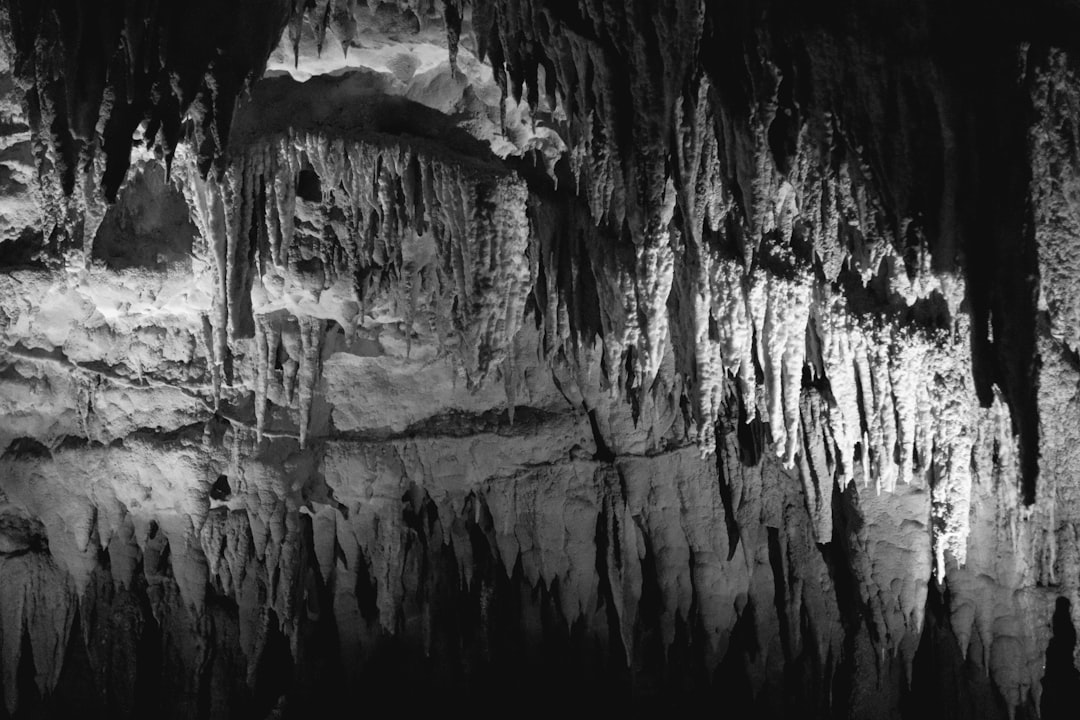
What is the Gyokusendo cave walk actually like?
Wet, warm, and densely decorated — a real cave, not a token one. The full system runs about 5km; the public route is 890 metres, which several older English pages still round down to 850m. The prefectural tourism listing gives 890m and dates formation to roughly 300,000 years.
The walkway is raised concrete just above the cave floor, with an underground river alongside for much of it. Air sits near 21°C year-round at roughly 80% humidity. In July, when Naha averages about 29°C (JMA climate normals), you go from heat into soft wet cool and your lens fogs instantly.
What does it sound and feel like by hour?
- 09:00-09:45: Near-silent. You hear dripping water and your own footsteps. Maybe 15 people spread across 890m. This is the version worth photographing.
- 10:15-12:30: Coach wave. Groups of 30-40 moving as a block, guide microphones echoing off limestone. You will queue at the narrow points. This is when I do not come.
- 13:30-15:00: Second-best window. Half-full, moving freely.
- After 15:30: Quiet again but you’re racing the 16:00 reception cutoff for everything else.
Physically: allow 30-40 minutes. Stairs, narrow pinch points, and a long exit ramp up to the fruit garden. The park states everything except the cave is barrier-free — which is the polite way of saying wheelchairs cannot do Gyokusendo.
What should you wear? (the shoe mistake I see weekly)
The concrete inside is permanently wet and it is slick, particularly on the two descending stair sections near the start. In March 2025 I watched a woman in shower sandals go down hard about 100m in. Locals here wear sandals everywhere — beach, konbini, city hall — but this is the one place I put on trainers with actual tread.
- Shoes: closed, gripped. Not flip-flops, not smooth-soled boat shoes.
- Layers: none needed. 21°C feels cold for the first two minutes, then fine.
- Bag: anything you carry will get dripped on. Nothing paper in an outside pocket.
- Camera: lenses fog for 3-5 minutes on entry. Take the shot on the way back out, not on the way in.
The one thing I bring that tourists don’t
A cheap microfibre hand towel around my neck, not in my bag. Condensation lands on glasses, phone screens and the back of your neck continuously. Locals carry a towel everywhere here from May to October anyway — it’s not a cave-specific thing, it’s an Okinawa thing. You can buy one at any Family Mart for around 300 yen (~$2), as of January 2026.
How much does it cost, and which ticket do you actually need?
There is now one ticket. That single ticket covers Gyokusendo Cave, the Ryukyu Kingdom Castle Town, the Habu Museum Park, the tropical fruit garden, the Super Eisa show and the habu-and-mongoose show.
| Ticket | Yen | Approx. USD (¥150/$1) | Notes — as of January 2026 |
|---|---|---|---|
| Adult (15+) | 2,000 | ~$13.30 | All-inclusive; no cave-only option exists |
| Child (4-14) | 1,000 | ~$6.70 | Best value in the park for kids 5-12 |
| Under 4 | Free | $0 | Carrier strongly preferred over stroller in the cave |
| Group (15+ adults) | 1,800 ea. | ~$12 | Book ahead |
| Stroller rental | 300 | ~$2 | Wheelchairs free |
For a family of four (2 adults + 2 children aged 6 and 10), that’s 6,000 yen / ~$40 all-in, parking free. Set against a day at Churaumi, it is the cheaper half-day — I break both down against everything else on the island in my real 1-week Okinawa budget for 2026.
Do they take US credit cards, or is this cash-only?
The main ticket window and the souvenir hall take major cards, including US-issued Visa and Mastercard — I’ve paid by card at the gate. But this is southern Okinawa, and the moment you leave the park perimeter that changes fast. Bring 10,000 yen in cash per couple for the wider south route.
- Card reliably accepted: Okinawa World ticket window, souvenir hall, Nanto Shuzo distillery shop.
- Cash safer: small soba shops along Route 331, roadside fruit stands, Sefa-utaki’s ticket counter, vending machines.
- Foreign-card ATM: the 7-Eleven ATMs accept US cards. Nearest ones to the park are in Nanjo along Route 331 — top up before you turn inland.
- AmEx: patchy across Okinawa generally. Carry a Visa backup.
Is it cheaper on base or through an app?
ITT/MWR offices on the bases sometimes hold discounted attraction tickets, but stock and pricing move constantly and I will not print a number I can’t verify — call your own ITT desk. What I can verify is my own booking: I paid roughly $11.50 through Klook in March 2025, detailed further down.
Discontinued pricing that still haunts English pages
Plenty of English blogs still list a tiered menu (~620 yen village-only, 1,240 yen cave+village, 1,650 yen everything). Those tiers are gone. If Gyokusendo is all you want, you still pay 2,000 yen. I’ve watched three separate American families argue this at the window. You will not win.
What time do the Super Eisa and habu shows run?
Both run three times daily at fixed times, so your arrival hour decides whether you see them. As of January 2026: Super Eisa at 10:30, 12:30 and 14:30 (~30 min); habu-and-mongoose at 11:30, 13:30 and 15:30 (~20 min). Same venue, no reservation, and they run in rain.
Which show is worth planning around?
Super Eisa, easily. It’s a staged, amplified version of the drum-and-dance tradition you’d otherwise catch at the Zento Eisa Matsuri in Okinawa City every August. The drumming carries even if you don’t follow a word of Uchinaaguchi.
What locals do differently: we don’t sit centre-front. The taiko frequencies are punishing there for small children, and half the choreography is the circle formation, which reads better from the back third and the sides. My family sits back-left. Tourists fill the middle rows first, so the good seats are usually the empty ones.
Local truth: Every guide tells you to arrive at 09:00 for the empty cave, then stay for a show. What most Okinawan families actually do is the opposite — we come after 13:30, take the 14:30 Eisa, and hit the cave last at around 15:15 when the coaches have gone. You trade the silent 09:00 cave for a silent 15:15 cave plus zero morning traffic on the expressway. The one cost: you must be through the ticket window before 16:00, so it’s a plan for people already staying south, not for a Kadena start.
Is there English narration?
Honest answer: minimal. Eisa is essentially non-verbal, so it doesn’t matter — you lose nothing. The habu show has some English signage and staff will switch to simple English at the ticket window and souvenir hall, but the show patter itself is Japanese. Cave signage has English on the major formation placards; the interpretive detail is Japanese-only. Bring a translation app and accept that the cave is a visual experience, not a narrated one.
Arrival-hour math
- 09:30 arrival: cave first (entry is from the Gyokusendo side regardless), out by 10:15, comfortable seat at 10:30 Eisa. Best plan.
- 11:00 arrival: finish the cave right as the 12:30 show starts. Works, but you’re in the coach wave.
- 13:00 arrival: next Eisa is 90 minutes away. You’ll pad time in the castle town.
- 15:00 arrival: habu show at 15:30 and nothing else. Don’t.
Is the Habu Museum Park worth entering?
It’s included in your 2,000 yen, and it’s the section I’d skip if short on time — but not for the reason you’d guess. Live venomous snakes, other reptiles, and displays on habu biology and their place in rural Okinawan life. Nanto Shuzo, the on-site distillery, sells habu-shu (snake liquor, whole snake in the bottle) — a genuine Okinawan product, not a tourist invention.
The habu-and-mongoose show is a demonstration, not a fight. Staged animal fights were dropped years ago, and rightly so. Manage expectations accordingly — several visitors near me in March 2025 clearly expected otherwise and looked puzzled.
Why I still walk my kids through it: Tourist guides frame habu as a “fun photo op.” For those of us who grew up here, habu are a genuine rural hazard — my grandmother in Nanjo taught me to never put a hand into a stone wall gap or step blindly into long grass, and that’s still how I move around the countryside. Take the ten minutes to read why habu associate with sugarcane, stone walls and long grass. It’s the single most practically useful thing in the park, and it will change how you walk at Sefa-utaki and Chinen Misaki an hour later.
Should you buy habu-shu as a gift?
Practical warning for military families and tourists flying home: it’s a spirit, so it goes in checked baggage, and US customs allowances apply. If you want an awamori souvenir that people will actually drink, buy a standard Nanto Shuzo awamori instead — locals give awamori as gifts, we don’t give habu-shu to each other. Habu-shu is what we buy for visitors, which tells you something.
What I actually buy in the souvenir hall
- Kokuto (black sugar) blocks — light, cheap, survives a PCS box, and genuinely local.
- Shikuwasa ponzu — the one Okinawan condiment my mainland relatives request.
- Not the mass-market chinsuko multipacks; the same boxes are cheaper at any San-A supermarket.
How long do you really need inside the park?
Two and a half hours if efficient; three and a half with children or a craft workshop. The park covers roughly 540,000 square metres, but the route is linear and shorter than the acreage implies.
- Gyokusendo Cave: 30-40 min, including the exit ramp.
- Tropical fruit garden (the cave’s exit path): 10-15 min.
- Ryukyu Kingdom Castle Town + craft studios: 30-45 min browsing.
- Super Eisa: 30 min, plus 10 min for a seat.
- Habu Museum Park: 15-25 min.
- Souvenir hall + Nanto Shuzo: 15 min, more if buying awamori.
Craft experiences cost extra on top of admission, with final reception at 16:30 (Ryukyu glass has its own earlier cut-off), as of January 2026. Shisa painting runs about 20 minutes; weaving and bingata dyeing take longer. Small groups don’t need reservations; 15+ must book two weeks ahead.
What do you pair it with in the same half-day?
The south is compact, which is exactly why it works as a half-day rather than a full one. From the Okinawa World lot:
- Sefa-utaki — roughly 20 minutes east. Sacred site, uneven stone path, same footwear rules as the cave.
- Chinen Misaki Park — about 25 minutes, free, and the best cheap view in the south.
- Mibaru Beach — 15 minutes, and where local families actually swim rather than the resort strips.