The wettest stretch of Okinawa’s rainy season is usually May 25 to June 14, when the seasonal front stalls over the islands and dumps most of the month’s rain in a handful of days; the first ten days after onset and the week after June 20 are where beach days still land. I’m Daisuke, born and raised in Okinawa (34 years and counting), and I run okinawa-insider.com. Most tsuyu articles stop at the month level, which helps nobody whose flights are already locked to seven specific days. So here it is week by week.
This post contains affiliate links. If you book a tour or buy through them, I may earn a commission at no extra cost to you.
Which weeks of Okinawa’s rainy season actually get wet?
Ranked by how much rain lands and how long it sits: the last week of May and the first two weeks of June are the heaviest, mid-May is the most changeable, and the week either side of June 21 is where the sun comes back. That’s the short version, and it holds in most years even though the exact dates shift.
The reason is the front itself. It doesn’t rain steadily for six weeks. A rain band parks over the islands for two or three days, delivers a huge volume, then lifts north or sags south and leaves 24 to 48 hours of humid sun behind it. The Japan Meteorological Agency’s own Okinawa climate page describes June as the month when the front’s activity strengthens and heavy rain becomes frequent, until the Pacific high pushes west in late June and ends the season.
| Week | Typical pattern | Beach-day odds | What to book |
| May 4-10 | Onset window; first frontal passes, long sunny gaps | Good | Beaches, boat trips |
| May 11-17 | Front swings north and south; 2 wet days, 2 bright days | Fair to good | Flexible day-by-day plans |
| May 18-24 | Front settles; humidity climbs hard | Fair | Half indoor, half outdoor |
| May 25-31 | Often the heaviest band of the season | Poor | Aquarium, caves, museums |
| June 1-7 | Active front, strong downpours, warning-level days possible | Poor | Indoor plus rental car |
| June 8-14 | Still wet, but breaks get wider and longer | Fair | Morning outdoor, afternoon backup |
| June 15-21 | Break-up phase; south wind strengthens | Good | Snorkel and island hops |
| June 22-30 | Post-tsuyu high pressure, hot and stable | Very good | Everything, at higher prices |
Treat this as a probability table, not a promise. I’ve seen the pattern invert completely, which is why the next section covers how far the dates actually move.
When does tsuyu really start and end, and how far do those dates move?
The official reference dates are onset around May 10 and end around June 21, but the real spread across recent years is close to a month at each end. The JMA gives Okinawa’s normal rainy season as beginning about May 10 and ending about June 21, roughly a month earlier than Honshu. Plan against the normals, then re-check two weeks out.
Recent years show how loose that is. In 2026 the preliminary declarations were onset around May 4 and end around June 29; in 2025 it was May 5 to June 7, in 2024 May 21 to June 20, and in 2021 the season ran to about July 3. 2018 didn’t start until about June 1, and 2019 didn’t finish until about July 10. Typical length is 30 to 45 days.
What that means for booking: a trip dated June 24 to July 1 was gloriously dry in 2025 and still under the front in 2026. There is no date that guarantees anything. What you can control is where in the range you sit, and how much of your itinerary depends on one specific sunny afternoon. If you want the same reasoning applied to the whole calendar, I’ve laid it out in my best time to visit Okinawa breakdown.
What does a rainy day in Okinawa actually look like, hour to hour?
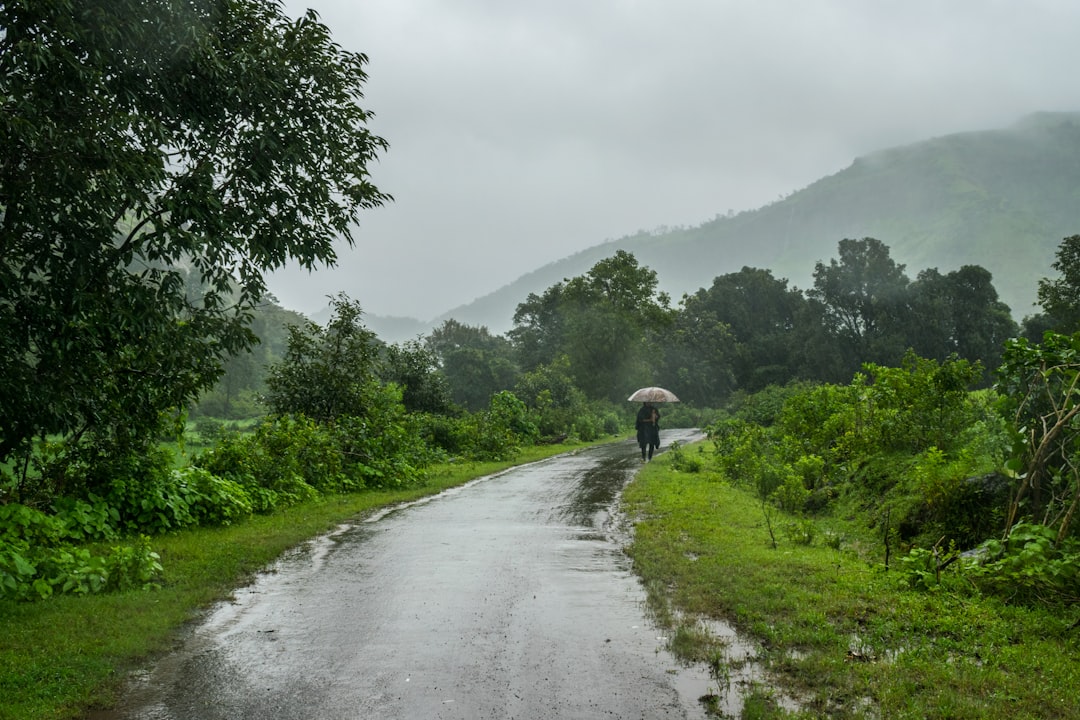
A typical tsuyu day is not grey drizzle from breakfast to bedtime. It’s a heavy band for 60 to 120 minutes, then flat cloud, then a bright gap, then possibly a second band. The rain arrives hard and leaves fast, and the temperature barely moves, sitting in the mid 20s Celsius all day.
The pattern I’d plan around looks like this:
- 06:00-09:00: often the clearest window of the day. Beaches and viewpoints are empty and the light is usable.
- 10:00-14:00: cloud thickens; the first band commonly lands somewhere in here.
- 14:00-17:00: brightest post-band gap. Roads dry within about 30 minutes because the pavement is warm.
- 17:00-20:00: second band on active-front days, often the heaviest of the 24 hours.
Volume is the part people underestimate. On one documented tsuyu day the front turned violent over the southern main island and Naha recorded 204 mm in a single day, equal to a normal full month of May rainfall. That is not an umbrella situation. That is a stay-off-the-mountain-roads situation, and it’s why I’d rather have a rental car and a loose plan than a packed schedule.
Which rainy-season weeks do locals still book beach days in?
Locals book beach days in the May 4-17 window and from about June 15 onward. Those are the two stretches where the front is either not yet established or already breaking up, so you get long sunny gaps rather than two-day washouts. Late May and the first fortnight of June are when families here quietly switch to indoor weekends.
Beach houses on the main island generally open from April, so early May is fully operational: showers, jellyfish nets, and rental gear are all in place well before the tourist peak. Yomitan and Onna sit within about 45 to 70 minutes of Naha Airport by car, which makes them realistic same-day pivots when the radar looks clean.
A practical note on wind. As the season winds down, a strong south to southwest wind called kaachibee (the summer solstice south wind) sets in as the Pacific high builds and the front lifts north. Beautiful for the sky, awkward for the west coast: Cape Maeda in Onna and the Blue Cave boat operators cancel on wave height, not on rain. When that wind is up, I’d move to a sheltered east-coast or bay-side spot instead of standing at a cancelled meeting point.
Is the ocean actually swimmable during tsuyu?
Yes, for most of it. Sea temperature around the main island runs roughly 24 to 27°C through May and June, which is comfortable without a wetsuit for most people, and the water is warm before the air feels properly tropical. The limiting factors are wave height, runoff, and jellyfish nets, not cold.
Three things change the answer week to week:
- Runoff. After a 100 mm-plus day, river mouths and reef flats near construction or farmland go cloudy for 24 to 48 hours. Northern Yanbaru beaches near river outflows are the worst affected; offshore reef sites recover fastest.
- Swell. A stalled front brings sustained onshore wind. Lifeguarded beaches raise the red flag on wave height even when the sun is out.
- Habu jellyfish. Netted swimming areas exist precisely because box jellyfish appear in the warm months. Swim inside the nets, and if a beach has no net and no lifeguard, treat it as a look-don’t-swim beach.
Visibility for snorkelling is usually better in the first half of June than people expect, because the heavy rain falls in concentrated bursts rather than continuous drizzle, and a 48-hour clear spell resets clarity. Conditions typically settle quickly once the front lifts north, which is why the days right after the season ends have such a strong reputation locally. If you’re weighing which coast to swim on in each month, my Okinawa beaches guide compares the west-coast and east-coast options side by side.
How much cheaper are flights and hotels during the rainy season?
Mid-May to mid-June is the cheapest window of the entire first half of the year for Okinawa, sitting between the Golden Week spike (April 29 to around May 6) and the summer surge that starts once Japanese school holidays begin around July 20. Late June is the interesting part: the weather improves before the price does, but not for long.
Resort rate calendars here are built around domestic demand, not rain. That produces a gap worth exploiting. The front’s break-up phase around June 15-21 often delivers usable weather while rooms are still priced in the shoulder band, and the last week of June starts climbing as the school holiday inventory fills.
Some fixed costs don’t move at all, which helps budgeting (all figures from the operators’ official sites, as of 2026):
- Churaumi Aquarium adult admission is listed at ¥2,180, with a cheaper late-afternoon ticket after 16:00.
- Okinawa World’s combined pass (cave, village, habu park) is listed at ¥2,000 for adults, ¥1,000 for children.
- The Okinawa Prefectural Museum permanent exhibition is listed at ¥530 for adults.
- A Yui Rail one-day pass is ¥800, two-day ¥1,400 — useful on wet Naha days.
Honestly, the biggest saving isn’t the room rate. It’s that you don’t need to pre-book anything two months out, so you can wait for the forecast and still get a table or a tour slot. My longer rainy season travel guide goes deeper on the booking timing.
What should I book for the wettest weeks, May 25 to June 14?
For the heaviest fortnight, build the itinerary around two or three genuinely weatherproof anchors and let everything else float. The three that hold up in real downpours are the aquarium in the north, the cave system in the south, and mobile data so you can re-plan from the car.
Affiliate link: if you book through this, I may earn a small commission at no extra cost to you.
Churaumi Aquarium is the obvious one, and it’s about 90 to 100 km from Naha Airport, roughly two hours by expressway. It genuinely works in rain because the walk from car park to entrance is short and covered sections dominate. Grab Churaumi Aquarium tickets in advance, because on a rained-out Saturday the ticket line is the bottleneck, not the tank hall.
Affiliate link: if you book through this, I may earn a small commission at no extra cost to you.
In the south, Okinawa World & Gyokusendo Cave is the better wet-weather choice than most people realise: Gyokusendo runs about 5 km in total with roughly 890 m open to visitors, and the cave temperature barely changes whatever the sky is doing. The walkway is wet by design, so rain outside is irrelevant.
Affiliate link: if you book through this, I may earn a small commission at no extra cost to you.
And get a Japan eSIM (instant QR) before you fly. Chasing radar gaps is the whole game in June, and it doesn’t work on hotel wifi.
How do I read the forecast here without wasting the morning?
Ignore the daily rain percentage and look at the rainfall radar and the front’s position instead. A 70% chance in Okinawa during tsuyu usually means one intense band and several usable dry hours, not a lost day. The percentage tells you almost nothing about whether the afternoon is salvageable.
What actually works, in order:
- JMA rainfall nowcast. Shows the band’s shape and movement for the next hour. If the band is narrow and moving northeast at speed, wait it out with a coffee.
- Warnings, not forecasts. A heavy rain warning (oame keiho) is the signal to cancel mountain drives and Yanbaru trails. An advisory is not.
- Wind direction. South and southwest wind means the west coast gets the chop, so flip to the east coast or an inland plan.
- Operator social feeds. Blue Cave and kayak operators post morning cancellation calls; check before you drive an hour.
Affiliate link: if you book through this, I may earn a small commission at no extra cost to you.
Humidity is the underrated variable. June is Naha’s most humid month of the year at roughly 86% average relative humidity. Nothing dries. Pack a second pair of shoes and stop expecting laundry to work overnight. Your Japan eSIM (instant QR) matters more here than at any other time of year.
What’s Easy to Get Wrong Here
The most common mistakes are assuming tsuyu means constant rain, assuming June is the wettest part of the year, and treating the season’s dates as fixed. All three are wrong in ways that cost real trip days.
Here’s the counter-intuitive one, and it’s checkable: tsuyu does not have the most rainy days of the Okinawan year. August records the highest number of rainy days (about 16.7), while November has the fewest. June carries the biggest volume, averaging around 220 mm. The difference between the two is the shape of the rain: June concentrates a lot of water into a few frontal days, while August spreads short squalls across more days and adds typhoons. So a June week can easily contain more usable sunshine than an August week, even though June looks worse on a rainfall chart.
Other traps: booking a non-refundable Blue Cave boat tour for a specific date instead of a flexible one, planning Yanbaru hiking in the first week of June (the trails turn to clay), and skipping a rental car because it rains, when the car is exactly what makes rain survivable.
Daisuke’s call: If your dates land between May 25 and June 14, stop planning a beach trip with indoor backups and plan an indoor trip with beach bonuses.
What would I do differently when planning a tsuyu week?
I’d stop optimising for the cheapest week and start optimising for the most flexible one. The price gap between the second week of June and the last week of June is real, but the usable-daylight gap is bigger, and the second one is what you actually remember.
Three changes I’d make to the standard approach:
- Book the north for late in the trip, not early. The two-hour drive to Motobu is a bad use of your one clear morning if that morning shows up on day two. Keep the long drive as the movable piece.
- Refuse fixed-date water activities before June 15. Pay slightly more for a reschedulable slot, or book on the day.
- Treat the expressway as optional. It saves meaningful time mainly on the Naha to Kyoda stretch (about 57 km, around ¥1,020 in tolls for a standard car according to the Okinawa Expressway operator, as of 2026). South of that, and north of Nago, Route 58 costs you very little extra time and is toll free.
I’d also stop over-indexing on tsuyu and pay more attention to what comes after it. Late June and early July are the calm before the busiest typhoon months, and that’s a separate planning problem I’ve written up in typhoon season real talk.
Which single week should I pick if I only get one?
June 15-21, with June 22-28 as the runner-up if your budget allows. The break-up phase of the front gives you meaningfully better odds than early June, while prices haven’t yet jumped to July levels, and the sea has usually settled after the last heavy band.
If your priority is cost rather than sunshine, take May 11-17. The front is established but unstable in your favour, and mid-May routinely produces alternating wet and bright days rather than sustained rain. It’s also comfortable: daytime temperatures sit in the mid-20s rather than the low 30s of August, which makes walking Shuri or the Nakagusuku ruins actually pleasant.
Affiliate link: if you book through this, I may earn a small commission at no extra cost to you.
The week I’d genuinely avoid, if I had free choice, is May 28 to June 6. That’s the statistical core of the season and the stretch most likely to hand you two consecutive washed-out days. If you’re already booked into it, front-load the indoor anchors and keep Churaumi Aquarium tickets and Okinawa World & Gyokusendo Cave as the two days you can definitely deliver.
One more local marker worth knowing: the old Okinawan name for the rainy season, suumanbousuu, comes from the solar terms Shouman (around May 21) and Boushu (around June 6) — the two dates that bracket almost exactly the fortnight I’ve told you to plan indoors around. The name has been in use here far longer than any meteorological agency, and it points at the same window.
Frequently asked questions about Okinawa’s rainy season
Does it rain all day during Okinawa’s rainy season?
No. The normal shape of a tsuyu day is one or two heavy bands of 60 to 120 minutes each, separated by flat cloud and bright gaps. Naha averages roughly 220 mm across June but only around 12 to 13 rainy days, which means the water arrives in concentrated bursts rather than steady drizzle. Plan outdoor activity for 06:00-09:00 and the 14:00-17:00 gap, and keep an indoor anchor for the rest.
Should I cancel my trip if it falls in June?
No — reshape it instead. June is the cheapest half of the first six months of the year, the sea is already 24 to 27°C, and the indoor anchors (Churaumi at ¥2,180 for adults, Okinawa World at ¥2,000, the Prefectural Museum at ¥530, all official prices as of 2026) are genuinely good rather than consolation prizes. What you should cancel is any non-refundable, fixed-date boat or kayak booking before June 15.
Do typhoons hit during tsuyu?
Occasionally, but it’s not the main season. Typhoon activity around Okinawa peaks from August to September; early-season storms in May and June happen but are far less frequent. If one does approach, ferries and inter-island flights stop before the main island’s airport does, so island-hopping legs are the first thing to protect. I go through the cancellation and rebooking rules in typhoon season real talk.
Do I need a rental car in the rainy season?
More than at any other time of year. Chasing radar gaps means being able to leave Onna for the sheltered east coast at 30 minutes’ notice, and buses cannot do that. The Naha-to-Kyoda expressway run is about 57 km and around ¥1,020 in tolls for a standard car (as of 2026); everything else on the main island is toll free. Pick the car up at the airport and treat Route 58 as the free alternative when the expressway is backed up.
What should I pack for tsuyu specifically?
A second pair of shoes, quick-dry clothing, and a compact rain jacket rather than an umbrella — the south wind in mid-June turns umbrellas inside out. June averages roughly 86% relative humidity in Naha, so nothing air-dries overnight in a hotel room. Coin laundries with dryers are common in Naha, Chatan and Nago, and are the practical fix on a five-day-plus trip.
Update Log
- February 2026 — Added the 2026 preliminary onset (around May 4) and end (around June 29) dates to the season-length section; rechecked admission prices for Churaumi, Okinawa World, the Prefectural Museum and Yui Rail against their official sites.
- July 2025 — Updated the week-by-week table after the unusually early 2025 season end (June 7), and rewrote the forecast-reading section around the JMA rainfall nowcast.
- May 2025 — First published, built from JMA normals for onset (May 10), end (June 21), June rainfall and June humidity.