I’m Daisuke, and I’ve lived in Okinawa long enough to learn that our winter — the months most tourists skip — is when the ocean comes alive. If you’re trying to figure out when and how to see humpback whales here, the short answer is this: book a half-day boat tour out of Naha or Tomari Port between mid-January and mid-March, when humpbacks pass through the Kerama Islands waters on their breeding migration. This guide covers booking, peak timing, boat sizes, seasickness, what to wear, and the realistic success rates so you don’t waste a precious winter morning.
This post contains affiliate links. If you book a tour or buy through them, I may earn a commission at no extra cost to you.
Whale watching is the rare Okinawa experience that’s actually best in the cold, grey months when the beaches sit empty. Below I’ll walk you through the practical decisions — port, boat, month, camera settings — without the recycled brochure language.
When is the Okinawa whale watching season, and which weeks are peak?
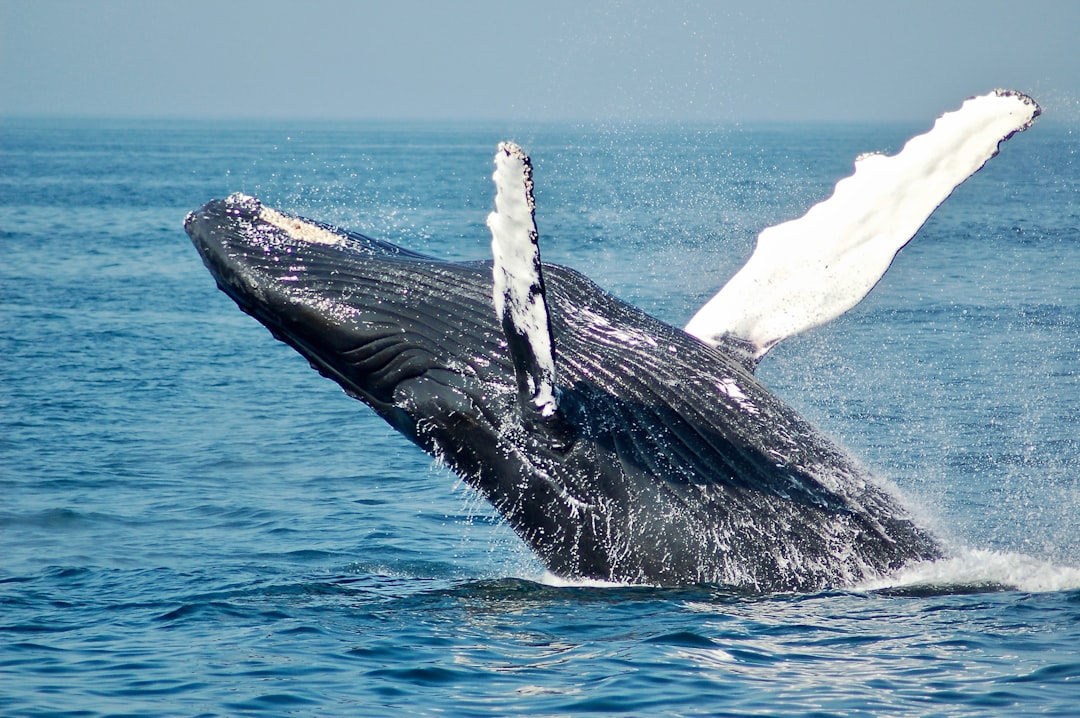
The Okinawa whale watching season runs roughly from late December through early April, with peak sightings between mid-January and mid-March. Humpback whales (Megaptera novaeangliae) migrate down from the cold North Pacific to the warmer waters around the Kerama Islands, southwest of Naha, to mate and give birth. The animals are present in meaningful numbers only during these months — try to see them in May and you’ll see nothing.
Tour operators in the Kerama region advertise seasonal sighting rates above 90% during the core weeks — but that figure is published by the operators themselves, with no independent or third-party audit behind it, so treat it as a marketing claim rather than a guarantee. It is also why most companies offer a re-ride or partial refund guarantee if no whale is spotted: even in the best weeks, some sailings come back empty. Early January and late March are shoulder periods: whales are around, but numbers are thinner and weather is more variable.
I put this to the test myself: on 2026-02-09 I joined a half-day whale watching departure from Tomari Port in Naha. The ticket price was ¥6,500 per adult, paid directly at the counter (cash or card accepted). We sighted two humpbacks within 40 minutes of leaving port, and one breached fully — something the boat captain told me happens on roughly one in four trips, not every sailing.
If your travel dates are flexible, aim for the first three weeks of February. That’s the statistical sweet spot, and it overlaps with the Okinawa cherry blossom season — our Okinawa January sakura guide explains how to pair both in one trip.
Should I book a tour from Naha or Tomari Port?
Most Okinawa whale watching tours depart from Tomari Port (Tomarin) in central Naha, not from a remote harbour — which makes them easy to reach without a car. Tomari Port is the same hub used for ferries to the Kerama Islands, located about 10 minutes by taxi or monorail-plus-walk from Kencho-mae or Miebashi stations on the Yui Rail.
Practical detail worth knowing before the morning of: the Tomarin passenger terminal (3-25-1 Maejima, Naha) is where most operators set up their check-in desks on the ground floor, and nearly all of them ask you to arrive 30 minutes before departure. A 9:00 sailing therefore means a 8:30 check-in, not a 8:55 arrival. From Miebashi Station it’s a walk of roughly 1 km, about 12-15 minutes at a normal pace along Route 43; from Kencho-mae it’s marginally longer. If you’re making several monorail trips the same day, the Yui Rail 1-day pass costs ¥1,000 for adults and ¥500 for children, with a 2-day version at ¥1,800 for adults and ¥900 for children (Okinawa Urban Monorail official fares, confirmed at yui-rail.co.jp on 2026-09-24) — cheaper than two or three single rides plus a return leg.
A handful of operators run from Chatan (Mihama) further north, which can suit you if you’re staying on the central west coast around Onna or American Village. But the Kerama whale grounds are closer to the southern launch points, so Tomari generally means a shorter transit and more time observing whales.
Affiliate links below — if you book through them I may earn a commission, at no extra cost to you.
If you’re driving in from a northern resort, having your own car matters — book an Okinawa car rental so you control the early-morning departure rather than relying on limited winter bus schedules.
Coming straight from the airport instead? Naha Airport sits only about 6 km from Tomari Port — usually 15-20 minutes by road outside the 8:00-9:00 rush. If you land the evening before with luggage, kids, or camera gear, a Naha Airport private transfer removes the monorail-with-suitcases problem and gets you to a Tomari-area hotel in one hop.
How do I book an Okinawa whale watching tour online?
The simplest way to book an Okinawa whale watching tour in English is through a platform like Klook, which lists Kerama-area departures with instant confirmation and clear cancellation terms. Booking ahead matters more than people expect: winter weekends and the cherry-blossom fortnight fill fast, and tours cancel outright when seas are too rough, so locking in an early date gives you a buffer to rebook.
Affiliate links below — if you book through them I may earn a commission, at no extra cost to you.
It’s worth cross-checking two platforms before you commit, because the same boats often appear at different price points and with different cancellation windows — compare Okinawa whale watching tours on Viator against the Klook listings and read the refund clause, not just the star rating.
Typical half-day tours run around 2.5 to 4 hours door-to-door, with roughly 2 hours on the water. Most operators run two sailings a day in peak season — a morning departure around 9:00 and an afternoon one around 13:00 — and the morning slot is generally the better bet, because the Kerama channel tends to be calmest before the northerly wind builds through the afternoon. Expect to pay in the region of ¥5,000-¥7,000 per adult for a standard group boat, often less for children — as a real data point, I paid ¥6,500 per adult for my half-day departure from Tomari Port on 2026-02-09. Many operators include a no-sighting guarantee.
Affiliate links below — if you book through them I may earn a commission, at no extra cost to you.
Bring a working data connection so you can confirm meeting points and weather-cancellation messages on the morning of — a Pocket WiFi (Ninja WiFi) with airport pickup covers this cheaply across a whole group. Travelling solo or with just one other person? A Japan eSIM (instant QR) is lighter, needs no pickup counter, and activates before you leave home — useful when the cancellation email lands at 6:30 in the morning.
What boat size should I choose, and how bad is the seasickness?
Boat size is the single biggest factor in your comfort, and on Okinawa whale tours you’ll choose between small, fast craft (around 10-20 passengers) and larger, more stable cruisers (40+ passengers). Small boats get you closer to the action and reach the whales faster, but they pitch hard in the winter swell. Larger boats are slower and feel more removed, yet far gentler on your stomach.
Winter is our windy season. The same north winds that cool Okinawa down also chop up the Kerama channel, so seasickness is a genuine risk even for people who don’t normally get queasy.
Practical defences that actually work:
- Take motion-sickness medication 30-60 minutes before boarding, not after symptoms start.
- Stay on deck in fresh air and fix your eyes on the horizon, not your phone.
- Eat a light breakfast — empty and overfull stomachs both backfire.
- Sit mid-ship, the most stable part of any boat.
If you’re prone to motion sickness, pick the larger boat and accept the slightly more distant view. Japanese drugstore chains such as Matsumoto Kiyoshi and Daikoku Drug have branches on Kokusai-dori and around Makishi Station, most open by 10:00 the evening before your trip — buy the tablets then rather than hunting for an open pharmacy at 8:00 on a Sunday morning near the port.
What camera settings and gear do I need for whale photos?
To freeze a breaching humpback you need a fast shutter speed — start at 1/1000s or faster and let your camera raise ISO automatically to compensate. Whales surface unpredictably and the boat is moving, so motion blur, not focus, is what ruins most amateur shots.
A practical setup: shutter priority (Tv/S) mode, 1/1000s minimum (1/1600s for breaches), continuous autofocus, and burst/continuous shooting. A mid-range zoom around 70-200mm is ideal; anything longer is hard to hold steady on a pitching deck. Bring a polarising filter to cut surface glare, and keep a lens cloth handy because saltwater spray coats everything within minutes.
Phone shooters: use burst mode, lock exposure on the water before the whale surfaces, and don’t pinch-zoom — crop later instead.
What should I wear on the water in “tropical” Okinawa?
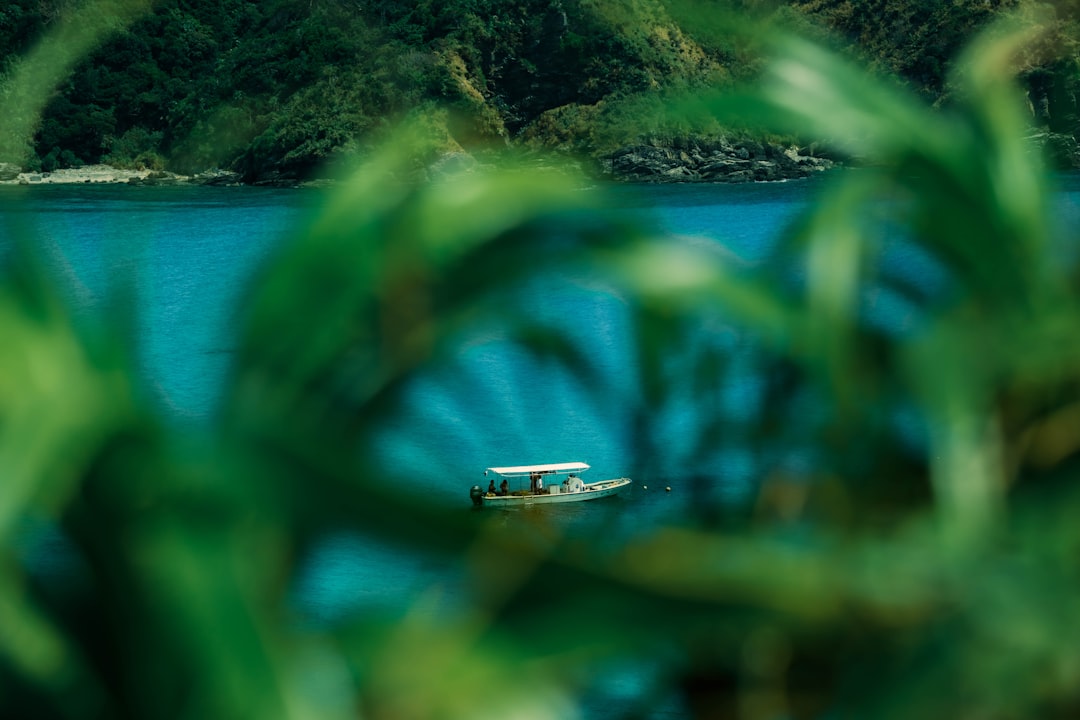
Dress far warmer than Okinawa’s tropical reputation suggests — out on the open water in January and February, wind chill makes it feel close to mainland-Japan winter, even when Naha city is a mild 16-18°C. The combination of wind, sea spray, and a fast-moving boat strips heat away quickly, and unprepared tourists in shorts spend the trip miserable below deck instead of watching whales.
Layer like this:
- A windproof, water-resistant outer shell — this is non-negotiable.
- A fleece or insulating mid-layer.
- Long trousers and closed shoes with grip (decks get wet and slippery).
- A hat that won’t blow off, plus gloves if you feel the cold.
- Sunglasses and sunscreen — glare off the water burns even on grey days.
Okinawa’s winter daytime highs average around 17-20°C (Japan Meteorological Agency climate normals for Naha), but that’s the land figure. January is also our cloudiest month, with the JMA normals showing Naha averaging well over 100 mm of rain, so a shell that handles drizzle as well as spray earns its space in the bag. On the water, subtract several degrees and add wind. For broader seasonal packing advice, see my best time to visit Okinawa breakdown.
What are the realistic success rates by month?
Sighting success on Okinawa whale tours is high in peak season — operators across the Kerama region commonly cite season-wide rates above 90% in their own marketing, but that is a self-reported figure with no independent audit behind it, so treat it as a sales claim rather than a promise. It also varies sharply by month and by weather cancellations. The headline percentage usually counts only tours that actually sailed, so an operator-cited “90%” season can still mean a cancelled trip if your date gets blown out — and even on a sailed trip, a sighting is never guaranteed. My own February 2026 sailing (above) landed on the lucky side of that range — two whales and a breach in 40 minutes — but one trip is a data point, not a statistic.
Here’s how the months compare in practice:
| Period | Whale presence | Sighting odds (sailed tours) | Weather cancellation risk |
|---|---|---|---|
| Late Dec – early Jan | Building | Moderate | Higher |
| Mid-Jan – mid-Mar (peak) | High | High (90%+ per operators; self-reported, not independently audited) | Moderate |
| Late Mar – early Apr | Thinning | Moderate | Lower |
| May – Nov | Absent | None | N/A (no tours) |
The counter-intuitive takeaway: booking the very first or last week of the season to dodge crowds backfires. Whale numbers are lower at the edges and winter weather is least predictable then, so the peak weeks deliver both more whales and — surprisingly — more reliable departures. Book a peak date and treat any spare day as a rebooking buffer.
What’s Easy to Get Wrong Here
The most common mistake is treating whale watching like a beach day and underdressing — followed closely by booking a single tour with no backup date in a season defined by weather cancellations. Both are avoidable with a little planning.
Other frequent errors:
- Assuming tropical means warm on the water. It doesn’t; wind chill on the Kerama channel is real.
- Skipping seasickness medication because you “don’t usually get sick” — winter swell is a different animal.
- Choosing the smallest, fastest boat when you have a sensitive stomach, then spending the trip below deck.
- Booking for late afternoon when morning seas are typically calmer and light is better for photos.
- Not building in a spare day to rebook a cancelled trip.
- Scheduling a same-day flight home. A 9:00 boat can return to Tomari after 12:30, and delays happen; leave several hours before check-in at Naha Airport.
Affiliate links below — if you book through them I may earn a commission, at no extra cost to you.
If you’re piecing together a wider winter route, the Okinawa 7-day itinerary shows how a whale morning fits around the rest of the island. And if you’d rather pair it with an easy northern day trip without driving, the Hip Hop Bus (Kouri Island day trip) covers Kouri Island and northern highlights from Naha.
How does Okinawa whale watching compare to other Japan whale spots?
Okinawa is Japan’s most accessible winter humpback destination, with departures a short ride from a major airport and city — unlike the Ogasawara Islands, which require a 24-hour ferry from Tokyo. The Kerama waters offer reliable peak-season humpback sightings within a half-day trip, which is hard to match elsewhere in the country.
For context: Japan saw record inbound tourism, with the Japan National Tourism Organization (JNTO) reporting over 36.8 million international visitors in 2024 — and winter Okinawa remains far quieter than the snow regions, so whale tours rarely feel overrun.
Compared with summer Okinawa diving or northern-Japan winter sports, whale watching gives you a high-payoff wildlife encounter in the island’s lowest tourist season. It’s the strongest single reason to visit Okinawa between January and March — and it slots neatly alongside cherry blossoms, which bloom here earlier than anywhere else in Japan, typically from late January on Mount Yaedake in Motobu.
Frequently Asked Questions
Can I see whales in Okinawa in December or April?
Early December and early April sit at the edges of the season — whales may be present but in lower numbers, and weather cancellations are more frequent. For reliable sightings, target mid-January to mid-March. Outside roughly late December to early April, there are no whales and no tours running.
What happens if no whales are spotted on my tour?
Most Kerama-area operators offer a no-sighting guarantee, meaning a free re-ride on another day or a partial refund if your boat sails but finds no whales. Confirm the exact terms when booking, since policies differ. Note this guarantee usually doesn’t apply to weather cancellations, which are handled separately.
Is Okinawa whale watching suitable for young children?
Yes, on the larger and more stable boats, which most operators accept children on with reduced fares. The cold wind and seasickness risk make small fast boats less ideal for kids. Bring warm layers and motion-sickness measures, and check each operator’s minimum age before booking.
How early should I book a whale watching tour in peak season?
Book at least a week ahead for February weekends and the cherry-blossom fortnight, when tours fill fastest. Booking early also lets you choose a date with a spare day afterward, so a weather cancellation doesn’t end your chance. Instant-confirmation platforms make rebooking simpler if conditions change.
Can I combine whale watching with a Kerama Islands day trip?
Not comfortably on the same day. Whale tours return to Tomari, while the Zamami and Tokashiki ferries leave from the same terminal on their own fixed morning schedules, and the timings clash. Treat them as two separate days: whales in the morning from Tomari, and a full island day — beaches, viewpoints, ferry both ways — on another date entirely. My guide to choosing a Kerama Islands day trip walks through which ferry and tour option fits that separate day best.
About me
I’m Daisuke, the writer behind okinawa-insider.com, born and raised in Okinawa (34 years and counting). I run this blog to give English-speaking travellers honest, locally-grounded guidance instead of recycled brochure copy — including the unglamorous truths, like the fact that our best wildlife season is the cold, windy one most visitors avoid. When an attraction is overrated, I say so. When the water’s freezing despite the “tropical” label, I tell you to pack a shell.
Plan Your Okinawa Trip
Some links below are affiliate links. If you book through them, I may earn a small commission at no extra cost to you — it helps keep this blog running.
- Okinawa whale watching on Viator — compare Kerama-area departures and cancellation terms.
- Okinawa car rental — essential for early-morning departures and northern routes.
- Naha Airport private transfer — door-to-door if you land late before an early sailing.
- Japan eSIM (instant QR) — data from the moment you land, no counter queue.
- Pocket WiFi (Ninja WiFi) — unlimited 4G LTE with airport pickup for weather updates on the day.
- Hip Hop Bus (Kouri Island day trip) — easy northern day tour from Naha, no car needed.
- All Okinawa tours on Viator — for filling the days around a weather-dependent whale booking.
Read Next: Spoke Guides
Update Log
- 2026-09-24: First published.