By Daisuke — born and raised in Okinawa (34 years and counting).
Pick Miyakojima if the water is the whole point of your trip, and pick the main island if you want variety, real food options, and the ability to fill a rainy day. I’m Daisuke, born and raised in Okinawa (34 years and counting), and this is the question readers ask me more than any other. Most people try to squeeze both into six nights, burn a full day on the transfer, and end up half-doing each. Here’s the honest comparison across beaches, driving, food, cost, flight logistics, and how many nights each island actually needs.
This post contains affiliate links. If you book a tour or buy through them, I may earn a commission at no extra cost to you.
Miyakojima vs Okinawa main island: which one should I pick if I only have one trip?
Choose Miyako if you will rent a car, you want beach and reef time as the main activity, and you can give it at least three nights. Choose the main island if you want a mix of sights, city food, and options that survive bad weather, or if you would rather not drive at all.
The two islands are not different versions of the same holiday. Okinawa’s main island is 106 km long with roughly 1.4 million residents, an international airport, a monorail, expressway, and enough indoor attractions to absorb a wet afternoon. Miyakojima City had 53,035 residents as of February 2025 across a mostly flat limestone island of about 205 km², and its draw is water clarity plus a slower pace.
Quick rules I’d apply:
- First trip to Japan, and Okinawa is one leg of a longer route: main island.
- You’re travelling with someone who won’t drive: main island, since Miyako’s bus network is thin.
- You want to swim, snorkel, and do very little else for four days: Miyako.
- Trip is in early September and you have zero schedule flexibility: main island, because typhoon disruption has more workarounds there.
- You’ve already done Naha and Churaumi on a previous trip: Miyako, easily.
How different is the water and beach quality between Miyako and the main island?
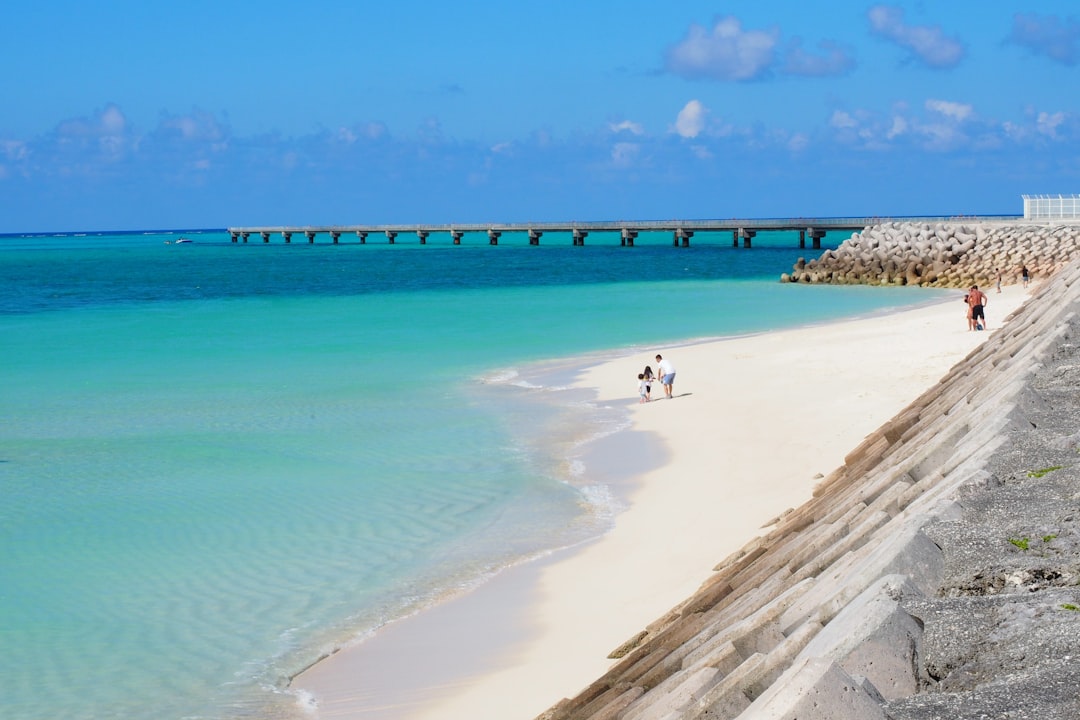
Miyako’s water really is clearer on average, and there’s a geological reason rather than a marketing one. Miyako Island is low limestone with a high point of 114.8 m and no mountain rivers, so rainfall drains down through porous rock instead of carrying sediment out to the reef. The main island’s north has mountains, rivers, and red soil that runs off after heavy rain, which can leave nearshore water milky for a day or two.
That’s the honest mechanism behind the colour people photograph at Yonaha Maehama or from the Irabu bridge. It doesn’t mean the main island’s beaches are bad. It means main island beach quality varies far more with weather and with which coast you’re on.
The main island’s counter-argument is the Kerama Islands, reachable by high-speed boat from Tomari Port in Naha in roughly 35 minutes to Tokashiki. Kerama water matches Miyako. The catch is that it’s a day trip with fixed boat times, not something you can decide on at 10am from your hotel balcony.
Affiliate link: if you book through this, I may earn a small commission at no extra cost to you.
On Miyako, wild green sea turtles are commonly seen on reef snorkel outings near Ikema and Irabu, and a guided half-day trip is the low-risk way to find them: Miyakojima sea turtle snorkeling.
What does a day of driving actually look like on each island?
On Miyako you rarely drive more than 40 minutes to anything. On the main island, driving is the trip’s biggest hidden time cost, and the north is far away from Naha in a way maps understate.
The Okinawa Churaumi Aquarium’s own access page puts the drive from Naha Airport at about two hours via the Okinawa Expressway, and about three hours by express bus. Here’s the part that surprises people: the expressway ends at Kyoda IC, so the final stretch to Motobu is ordinary road no matter what you pay. The toll section mostly buys you an escape from Route 58 traffic through Ginowan and Chatan, which is genuinely slow on weekday evenings between roughly 17:00 and 19:00. Outside those hours, the free coastal route north of Onna is barely slower and considerably better looking.
Miyako’s driving is the opposite experience. The island is about 159 km² and flat, and the Irabu Ohashi bridge, at 3,540 m, has been the longest toll-free bridge in Japan since it opened on 31 January 2015. Ikema Bridge adds another 1,425 m of causeway to the north, opened in 1992.
Affiliate link: if you book through this, I may earn a small commission at no extra cost to you.
Either island, book the car before the flight in July and August: Okinawa car rental.
Which island has the better food scene for a traveller?
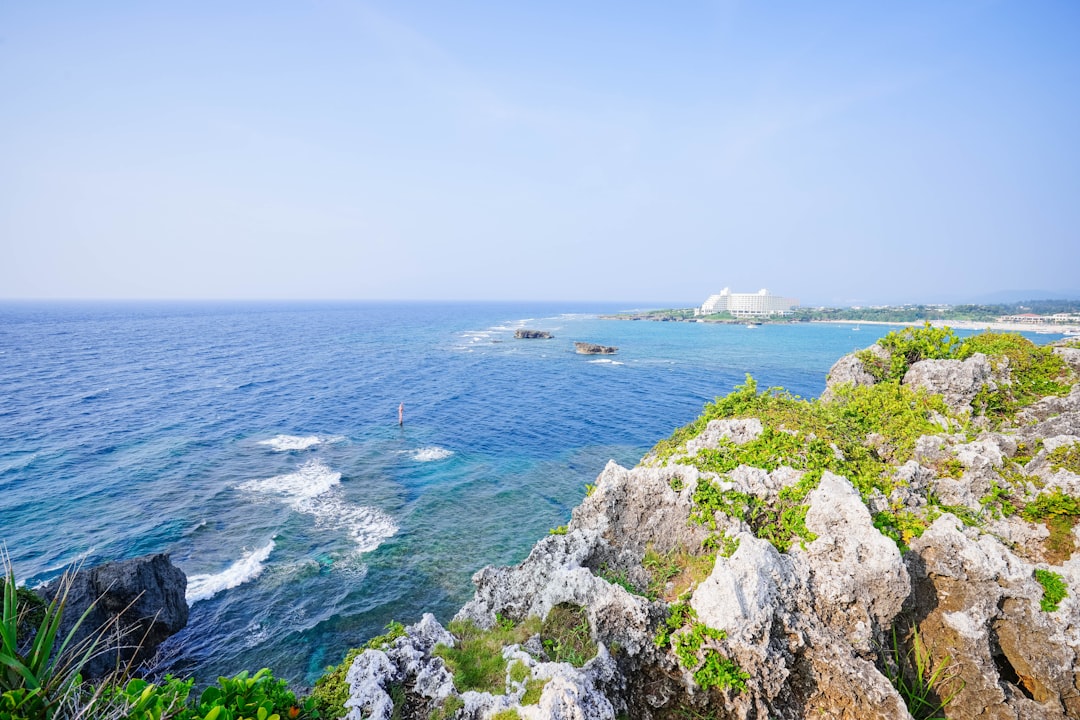
The main island wins on food, and it isn’t close. Naha alone has izakaya, awamori bars, Okinawa soba shops open at 11:00, and late-night options that Miyako simply doesn’t have in volume.
An honest note about Kokusai-dori: I’d skip most of its restaurants. It’s the street every visitor walks and it’s fine for souvenirs and a beer, but the cooking is aimed at people who will eat there once. The first Makishi Public Market building reopened as a new structure in March 2023, and the upstairs stalls that cook fish you buy downstairs are still a good use of a lunch. Head one or two streets back from the main drag and prices drop while quality rises.
Miyako’s food is smaller but specific. Miyako soba, Miyako beef, and local seafood are the things to eat, mostly in Hirara. What catches people out is timing and geography: many Miyako restaurants stop taking orders around 21:00, resort areas like Maehama have almost nothing walkable, and in July and August the good places in Hirara want a reservation. That means someone in your group drives to dinner and doesn’t drink.
What does each island cost, and where does the money actually go?
Miyako costs more per night for a similar standard of room, and the main island costs more per day in fuel, tolls, and admissions. The single biggest variable is the extra domestic flight Miyako requires.
Miyako’s accommodation skews to resorts and pensions, with far fewer of the ¥7,000-a-night business hotels that Naha has in bulk. Add a rental car for every day, because there’s no practical alternative. On the main island you can stay in Naha without a car for two nights, use the Yui Rail monorail, and only rent for the days you head north.
| Factor | Okinawa main island | Miyakojima |
| Getting there | Direct international and domestic flights into Naha (OKA) | Add a flight: Naha to Miyako is 283 km, about 55 minutes on ANA or JTA |
| Car needed? | Optional for 2 to 3 days if you base in Naha | Effectively mandatory, every day |
| Signature paid sight | Churaumi Aquarium, adult ¥2,180 | Free: Irabu bridge, Higashi-Hennazaki cape, most beaches |
| Rainy-day options | Museums, aquarium, Naha shopping, Shuri area | Very limited, mostly cafés and a drive |
| Minimum nights | 4 | 3 |
| Best for | First-timers, mixed-interest groups, non-drivers | Swimmers, snorkellers, repeat visitors |
One offset worth knowing: Miyako’s headline attractions are mostly free. Higashi-Hennazaki, a nationally designated Place of Scenic Beauty at the island’s southeast tip, is a 2 km cape you walk for nothing. On the main island your daily spend includes tickets.
How do the flights work, and how many nights does each island need?
Naha (OKA) is the hub and Miyako (MMY) is a spoke. ANA and Japan Transocean Air fly Naha to Miyako in about 55 minutes over 283 km, with departures roughly hourly through the day. There are also direct routes to Miyako from Haneda and Kansai, and neighbouring Shimojishima Airport (SHI) carries a small number of low-cost services.
There’s no scheduled passenger ferry that makes sense for visitors between Naha and Miyako. Flying is the option.
The logistics detail that costs people money: if your international arrival into Naha and your Miyako flight are on separate tickets, leave at least three hours in between. On one ticket, the airline rebooks you when things slip. On two, you eat the fare. I’d rather overnight in Naha and fly to Miyako the next morning than gamble on a same-day connection after a long-haul.
Nights I’d budget: Miyako needs three minimum, four to relax. The main island needs four, five if you want the north and the Kerama Islands. Anything under three nights on Miyako means you paid for a flight to spend one usable beach day there. More detail on routings is in my guide to getting to Okinawa and the outer islands.
Affiliate link: if you book through this, I may earn a small commission at no extra cost to you.
Book the Miyako car at the same time as the flight: rental cars in Okinawa and Miyakojima.
When should I go, and how do typhoons and jellyfish change the answer?
Late June through mid-July and late October through November are the two windows I’d defend for either island. Both avoid the worst of the typhoon peak while keeping water warm enough for long snorkel sessions.
Naha’s climate normals from the Japan Meteorological Agency put January around 17°C and July around 29°C, so winter is mild but not swimming weather for most visitors. The rainy season usually runs from early May to around the third week of June. Typhoon activity concentrates in August and September.
Two safety facts that matter more than the forecast. Habu jellyfish, a box jellyfish, are most prevalent from June to October, which is exactly high season, so swim inside netted areas where they exist. And Miyako has no habu snakes, unlike the main island’s forested north.
The typhoon asymmetry is the real decision factor. If a system parks near the Miyako islands, flights stop, shops close, and there is very little to do indoors. On the main island the same storm still leaves you the aquarium, the museums, and Naha. If your dates are locked in early September and you cannot move them, that asymmetry should push you north. Season detail by month is in my best time to visit Okinawa guide.
When does doing both islands actually make sense?
One case: you have eight nights or more, and you’re willing to spend one of them in Naha as a hinge. Below eight nights, doing both takes more than it gives.
Run the arithmetic on a transfer day. Return the Miyako rental car by around 10:00, check in for a flight that leaves 60 to 90 minutes later, fly 55 minutes, wait for bags, then collect a second rental car at Naha. That’s most of a day, twice if you’re round-tripping, and neither end of it is a beach day. On a six-night trip you’ve spent a third of your usable time in transit and rental counters.
The version that does work: four nights on the main island first (north for Churaumi and Onna, then Naha), one flexible night in Naha, then three or four nights on Miyako to finish. Ending on Miyako is better than starting there, because the pace drops instead of rising, and a weather problem at the start of the trip is easier to absorb than one on your last night.
Affiliate link: if you book through this, I may earn a small commission at no extra cost to you.
My 7-day Okinawa itinerary covers the single-island version, which is what I’d give most people. If you do combine, lock the Miyako activity slots early: half-day turtle snorkelling on Miyakojima.
What’s Easy to Get Wrong Here
The most common planning errors on this fork aren’t about taste. They’re about time, cars, and weather buffers.
- Assuming Miyako has a usable bus network. It doesn’t, for visitors. Services are infrequent and don’t connect the beaches you came for.
- Booking a Miyako rental car late in summer. Fleet sizes on the island are small and July and August sell out, often weeks ahead.
- Treating Churaumi as a half-day from Naha. The aquarium’s official access page says about two hours by car and about three hours by express bus each way. Adult admission is ¥2,180 and standard hours are 8:30 to 18:30 with last entry at 17:30, extended in summer months.
- Planning a Kerama day trip with no spare day. Boats from Tomari Port are cancelled in rough conditions, and there’s no second sailing to save you.
- Flying Naha to Miyako on a separate ticket with a two-hour connection. One delay and you’re buying a new fare.
- Expecting late-night food on Miyako outside Hirara. Resort areas empty out early.
Affiliate link: if you book through this, I may earn a small commission at no extra cost to you.
If summer is your only window, get the car booked before anything else: compare Okinawa car rental rates.
Daisuke’s call: If you can’t give Miyako at least three nights and a rental car, don’t go to Miyako.
What I’d do differently if I were planning your first Okinawa trip
I’d stop treating the main island as the compulsory part and Miyako as the reward. That framing is what produces the rushed two-island six-night trip I keep talking people out of.
Concretely, three changes. First, I’d base in Onna or Motobu rather than commuting north from Naha on day trips, because the aquarium at 08:30 opening is a completely different experience from the aquarium at 14:00, and you can only manage that if you slept within 30 minutes of it. Second, I’d give the main island’s north two nights and Naha one, not the other way round. Naha is a good half-day and a good dinner, not a base for a beach holiday.
Third, and this is the one I feel strongest about: I’d stop paying for the Okinawa Expressway on Sundays. Between Naha and Kyoda IC on a Sunday morning, Route 58 moves fine and follows the coast the whole way, and the expressway ends short of Motobu regardless.
One more opinion. Cape Manzamo is fine and takes 20 minutes, but I think it’s overrated relative to the driving it eats up if you’re not already staying in Onna.
Frequently asked questions
Is Miyakojima worth the extra flight from Naha?
If you have at least three nights for it and will rent a car, yes. The flight is about 55 minutes on ANA or JTA over 283 km, and the reef water near Irabu and Ikema is consistently clearer than most main island beaches. For a two-night visit, the transfer time cancels out the benefit.
Can I visit Miyakojima without renting a car?
Not comfortably. Public buses on Miyako are infrequent and don’t serve the beaches on a visitor-friendly schedule, so you’d be relying on taxis and hotel shuttles. Budget for a rental car for every day of your stay, and book it well ahead for July and August.
Which island is better for a first trip to Okinawa with kids?
The main island, mainly because of weather insurance. Churaumi Aquarium at ¥2,180 for adults, Ocean Expo Park’s free dolphin and turtle areas, and Naha’s indoor options give you something to do when it rains. Miyako’s appeal collapses on a wet day.
Do I need to worry about jellyfish or snakes when swimming?
Habu jellyfish, a box jellyfish species, are most prevalent from June to October across Okinawa, so use netted swimming areas during those months. Miyako Island has no habu snakes, while the main island’s forested north does, so stay on paths when hiking there.
About the author
I’m Daisuke, born and raised in Okinawa (34 years and counting). I write okinawa-insider.com in English because most of what’s published about these islands is either a tourism board rewrite or a three-day visitor’s guesswork. I’d rather tell you which drive isn’t worth it and which island suits the trip you’ve actually booked. Prices, hours, and transport details here are checked against official sources, and I note when something is my opinion rather than a fact.
Plan Your Okinawa Trip
These are affiliate links. If you book through them, I may earn a commission at no extra cost to you.
- Okinawa car rental — essential for Miyakojima and for anything north of Onna on the main island.
- Miyakojima sea turtle snorkeling — half-day guided reef snorkel with wild green turtles.
- Miyako Airport car pickup — small island fleet, book before July and August dates.
Prices and schedules were checked against official operator and attraction sources at the time of writing. Confirm before you travel, especially during typhoon season.
Read Next: Spoke Guides
- Getting to Okinawa: flights, ferries, and the outer islands
- The best time to visit Okinawa, month by month
- A 7-day Okinawa itinerary that doesn’t overrun
Update Log
- 2026-08-20: First published.