Yes, Okinawa works without a car if your trip is built around Naha, the southern half of the island, and one or two full-day tours; it stops working the moment you want Onna sunsets, quiet north beaches, or Kouri Island on your own schedule. I’m Daisuke, born and raised in Okinawa (34 years and counting), and I write okinawa-insider.com in English. Most car-free advice online either oversells the bus network or scares you straight into a rental counter. This is the honest map: where public transport genuinely covers you, where tours patch the gaps, and where the island simply assumes a steering wheel.
This post contains affiliate links. If you book a tour or buy through them, I may earn a commission at no extra cost to you.
Can you actually get around Okinawa without a car in 2026?
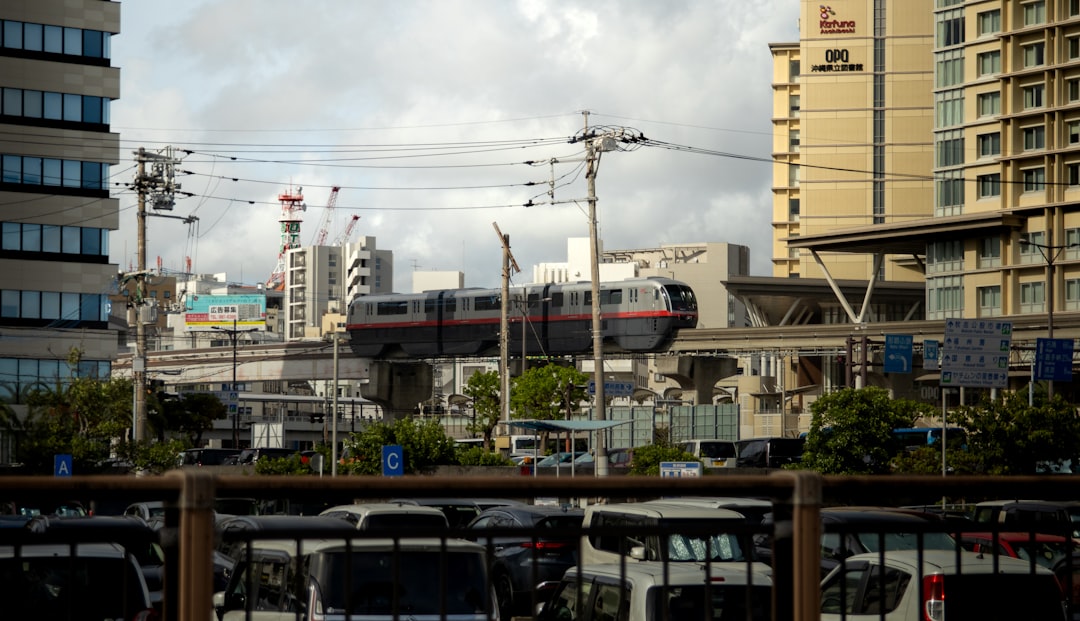
You can, and roughly 60 percent of a normal first-time itinerary is covered without ever touching a rental agreement. Naha has a monorail, the Yui Rail, running 19 stations from Naha Airport to Tedako-Uranishi in about 38 minutes, and highway buses connect the airport to Nago and the Motobu Peninsula several times an hour during the day.
The gap is the middle and the north. Okinawa Island is about 106 km long, and the coastal resorts strung along Route 58 in Onna Village sit between bus stops that are spaced for commuters, not for people who want to be at a viewpoint at 18:40 in June when the sun drops.
So the practical answer depends on trip style. Three or four nights based in Naha, with the monorail plus two organized day trips? Car-free is genuinely comfortable, often cheaper, and you get to drink awamori at dinner. Seven nights chasing beaches from Yomitan up to Cape Hedo? You’ll spend half your holiday reading timetables. If you’re on the fence about the other option, my honest guide to driving and renting a car in Okinawa covers what the rental side actually costs in time, not just yen.
How do you get from Naha Airport to your hotel without a rental car?
For anywhere in Naha, take the Yui Rail from the station attached to the domestic terminal; for anywhere north of Naha, take a reserved-seat highway bus or an airport shuttle from the arrivals-level bus stops. Those two options cover almost every hotel a visitor books.
Monorail fares depend on the stations you use; Naha Airport to Makishi costs ¥320 for an adult. Compare your planned single fares with Yui Rail station day passes (official, non-affiliate): the station-issued 1-day pass costs ¥1,000 for adults and ¥500 for children, and the 2-day pass costs ¥1,800 and ¥900 respectively. They are valid for 24 or 48 hours after purchase, so buy just before boarding. Whether a pass saves money depends on your route, rather than simply the number of rides.
Heading north instead? Yanbaru Express Bus fares from Naha Airport run about ¥2,000 for adults to Nago Bus Terminal. Buses drop at resort entrances along the way, but confirm which stop your hotel uses before you fly, because some Onna properties sit a 10-minute uphill walk from the highway.
Taxis are the fallback. Naha city centre is a 10-15 minute ride; central Onna is 45-55 km up Route 58, which is a fare you’ll feel.
What can you reach from Naha and the south using only the monorail and local buses?
More than most visitors expect. Shuri Castle Park, Tsuboya pottery street, Makishi Public Market, Naminoue Beach, and the Prefectural Museum are all monorail-plus-walking; the southern war memorial sites and Okinawa World are reachable on ordinary route buses from Naha Bus Terminal in roughly 40 to 70 minutes.
A realistic car-free Naha day looks like this. Shuri Station by 09:00, the castle grounds while it’s still under 30°C, back down for soba around 12:30, Kokusai-dori and the covered arcades in the afternoon, then Tomari Iyumachi fish market for sashimi before 18:00, when the good counters start selling out.
Southern Okinawa is the underrated part of car-free travel. The Peace Memorial Park in Itoman, the Himeyuri Peace Museum, and Gyokusendo cave at Okinawa World all sit on bus corridors that run at least hourly on weekdays. Bus riding here is slow but honest: you’ll pass sugarcane fields, tomb clusters and school kids, which is more of the real island than a highway blur.
Two practical notes. Many rural buses take OKICA, cash, or major IC cards, but not all take credit cards, so carry ¥3,000 in coins and small notes. And Sunday service on southern routes thins out noticeably after 18:00.
How do you get to Churaumi Aquarium and Motobu without driving?
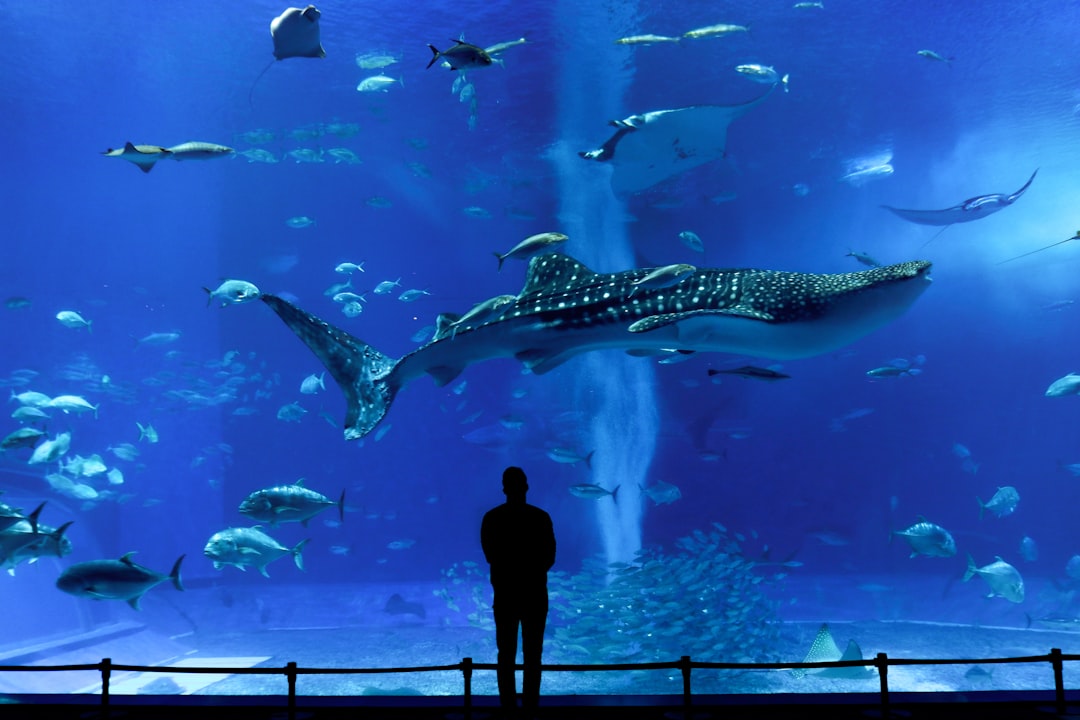
Take a highway bus from Naha Airport or the city centre straight to the Kinen-Koen-mae stop, then walk about 10 minutes into Ocean Expo Park. This is the single most reliable long-distance move on the island, and it’s why the aquarium stays on car-free itineraries.
The one-way trip takes a little over two hours and costs ¥1,900-2,000 on the Okinawa Airport Shuttle and Yanbaru Express, or ¥2,770-2,880 on bus 117, with one to two buses per hour; the shuttle and Yanbaru Express stop at the Prefectural Office (Kencho Kitaguchi) in central Naha, while 117 uses Naha Bus Terminal. The aquarium’s own access page puts the express bus at about three hours from Naha Airport, so budget on the pessimistic side.
| Option | One-way fare (adult) | Boards at | Best for |
| Okinawa Airport Shuttle / Yanbaru Express | ¥1,900-2,000 | Naha Airport, Kencho Kitaguchi | Cheapest direct run north |
| Bus 117 (highway) | ¥2,770-2,880 | Naha Bus Terminal, Naha Airport | Staying near the bus terminal |
| Local buses 65 / 66 from Nago | about ¥900 | Nago Bus Terminal | Already sleeping in the north |
Buses 65 and 66 link Nago with the Ocean Expo Park stop in about 50 minutes for roughly ¥900 one way, hourly. Admission is ¥2,180 for adults, ¥1,440 high school, ¥710 elementary and junior high, free under 6, with standard hours of 08:30-18:30 and last entry 17:30. Ocean Expo Park itself is free, including the dolphin lagoon and turtle pool, which matters when your return bus isn’t for another hour.
Where does Okinawa quietly assume you’re driving?
Three places break car-free trips: Onna Village at sunset, the beaches north of Nago, and Kouri Island. All of them are physically reachable by bus, and none of them are enjoyable that way, because the last useful return bus leaves before the part you came for.
Onna is the clearest example. Cape Manzamo, listed at ¥100 admission for high school age and up, closes its gate in the early evening, and the highway bus stops along Route 58 sit on a road with no footpath in several stretches. In late June the sun sets around 19:25 in Okinawa, which is after most convenient services have thinned out.
Kouri Island is worse. The Kouri Bridge is 1,960 metres long and there’s no scheduled tourist bus service across it, so independent travellers end up taxiing from Nakijin or skipping it. The Yanbaru forest region in the far north, a UNESCO World Heritage area since 2021, is effectively driver-only outside guided tours.
Honestly, if beaches at your own pace are the whole point of the trip, don’t force car-free. Read Naha vs Onna for where to stay before you book, because the accommodation choice decides this more than the transport does.
Which day tours actually replace a rental car, and which ones don’t?
Two tour formats genuinely replace a car: the multi-stop northern bundle (aquarium plus one or two viewpoints) and the hop-on-hop-off northern loop. Everything else is a nice add-on but doesn’t solve the coverage problem.
Affiliate link: if you book through this, I may earn a small commission at no extra cost to you.
The multi-stop northern bundle is the efficient one. A 1-day combo covering Churaumi, Cape Manzamo and American Village hits three places that would take two separate bus days to reach independently. You give up flexibility at each stop, usually 60 to 90 minutes, but you get the west coast scenery from a seat instead of from a timetable app.
Affiliate link: if you book through this, I may earn a small commission at no extra cost to you.
For the island’s northwest, the Hip Hop Bus with the Kouri Island stop is the only sane way to see Kouri without a car.
What doesn’t replace a car: sunset cruises, Naha food tours, half-day snorkelling. Fun, but they leave from where you already are. Book the long-distance tours first, then fill the gaps.
Where should you base yourself if you’re not driving: Naha, Chatan, or Onna?
Base in Naha. It’s the only part of Okinawa where you can leave the hotel without a plan and still have a good day. Chatan works as a second choice if you want beach-adjacent evenings; Onna is a trap for non-drivers despite being the most-photographed area of the island.
| Base | Airport access without a car | Daily life on foot | Weak point |
| Naha (Kokusai-dori / Asahibashi) | Yui Rail, 12-17 min, ¥230-370 | Excellent: food, markets, museums, buses | No swimmable resort beach |
| Chatan / American Village | Airport limousine or bus, about 60 min | Good: shops, Sunset Beach, seawall walk | Weak links onward to the north |
| Onna Village | Highway bus, about 75-90 min | Poor: resort-bound after dark | Sparse evening buses, few footpaths |
| Motobu / Nago | Highway bus, a little over 2 hours | Fair: buses 65/66 hourly to the park | Dinner options far apart |
A split stay is the compromise I’d actually recommend: three nights in Naha, then two nights in Motobu near Ocean Expo Park so the aquarium is a morning walk rather than a four-hour round trip. That structure is baked into my 7-day Okinawa itinerary.
What does a car-free week actually cost compared with renting?
For two adults staying five nights, car-free usually lands within a few thousand yen of renting, and it can come out cheaper once parking and fuel are counted honestly. The comparison people run in their heads is wrong because they compare the daily rental rate to bus fares and stop there.
Count the whole rental picture: the daily rate, compulsory insurance top-ups, fuel, expressway tolls if you use the Okinawa Expressway, and hotel parking, which most Naha city hotels charge for per night. Add the shuttle to the off-airport rental lot and the return process, which routinely eats 45-90 minutes across a trip.
Now the car-free side. A 48-hour monorail pass at ¥1,800, two highway bus legs to the north at ¥1,900-2,000 each way, one full-day tour, and a couple of taxi rides. That’s a predictable number, and nobody in your group loses their evening to being the designated driver.
Here’s the counter-intuitive part: the Okinawa Expressway mainly saves time between Naha and Nago, and highway buses use it too. So the express bus isn’t dramatically slower than driving on the same corridor. What you actually lose by not driving isn’t speed on the trunk route, it’s the last five kilometres to the beach, the viewpoint, the soba shop.
What’s Easy to Get Wrong Here
The most common car-free mistake is treating Okinawa’s bus network like a city network, where a missed bus means waiting 10 minutes. On many non-highway routes it means an hour, and after roughly 19:00 in rural areas it can mean a taxi or nothing.
Frequent errors I see in reader emails and forum posts:
- Booking an Onna resort for four nights and planning to bus to Churaumi daily. It’s a 90-plus-minute leg each way before you even reach the park.
- Assuming the aquarium stop is at the door. The bus stop is about a 10-minute walk from the aquarium.
- Ignoring exhibit closures. Coverage in 2026 indicated the upper viewing course of the Kuroshio Sea tank has been temporarily closed since March 2026, with the main window and lower areas still open, so check the official site before you commit a full day.
- Timing beaches badly. The Kuroshio Sea tank is 35 m across and 10 m deep, which is a two-hour visit for most people, not a 40-minute one.
- Underestimating heat on the walking legs. Naha’s July mean temperature is around 29°C in the JMA climate normals, and the walk from a highway bus stop is unshaded.
Daisuke’s call: If more than two of your must-see places sit north of Nago, rent the car and stop negotiating with the timetable.
What I’d Do Differently: how would I plan a car-free week now?
I’d stop trying to make one base work for the whole island. The mistake most people make, and the one I’d correct first, is booking five nights in a single hotel and then paying for that convenience with four hours of daily transit.
The version I’d plan now: nights one to three in Naha near a monorail station, using the 48-hour pass at ¥1,800 for the city days and one southern bus day to Itoman and Gyokusendo. Nights four and five in Motobu or Nakijin, reached on a single highway bus for around ¥2,000, so the aquarium is a 09:00 walk-in on a weekday rather than a bus-schedule sprint. Final night back near the airport.
I’d also front-load the tours. Book the northern combo day early in the trip, not last, because typhoon season peaks from August through September and a cancelled tour on day six has nowhere to go.
And I’d drop one thing. Trying to see both the far north and the Kerama Islands in the same car-free week doesn’t work; the ferries from Tomari Port and the northern buses pull in opposite directions. Pick one. If you’d rather have both, that’s the honest argument for renting a car.
Frequently asked questions about Okinawa without a car
Is one day enough to see Churaumi Aquarium by bus from Naha?
Yes, but it’s a full day, not a half day. With a little over two hours each way on the highway bus plus two to three hours inside, you’re looking at roughly 08:00 to 19:00. Take the earliest departure you can and buy tickets in advance to skip the counter queue.
Can I use Suica or ICOCA on Okinawa’s monorail and buses?
Suica and nine other IC cards, along with the local OKICA card, work on the Okinawa Monorail. Bus acceptance is less consistent, especially on rural routes, so keep cash for anything outside the main city and highway lines.
Do I need to reserve highway buses to the north in advance?
For the airport shuttle services, reserving is strongly advised in Golden Week, mid-August, and New Year, when seats genuinely sell out. Outside those windows you can usually board without a booking, though with only one to two buses per hour, a full bus costs you a whole hour.
Is Kouri Island worth visiting if I have to take a tour to get there?
If bridge views and a short beach stop are what you want, yes, a tour covers it perfectly well. If you were picturing a lazy afternoon on the island, no; tour stops there are typically under an hour, and there’s no practical scheduled bus to extend your stay.
About me
I’m Daisuke. I’m born and raised in Okinawa (34 years and counting), and I write okinawa-insider.com in English because too much of what’s published about this island is either resort marketing or a rewrite of a rewrite. I keep prices, bus fares and opening hours checked against official sources, and I say plainly when something isn’t worth your day. If a number here has changed, tell me and I’ll update it.
Plan Your Okinawa Trip
These are affiliate links. Booking through them costs you nothing extra and helps keep this site running.
- Yui Rail station day passes (official, non-affiliate) — unlimited monorail rides for 24 hours after purchase, ¥1,000 for adults and ¥500 for children; sold at Yui Rail stations.
- 1-day combo: Churaumi + Cape Manzamo + American Village — the three-stop northern day that replaces a rental car.
- Hip Hop Bus (Kouri Island day trip) — the realistic way to reach Kouri Island without driving.
Affiliate link: if you book through this, I may earn a small commission at no extra cost to you.
Affiliate link: if you book through this, I may earn a small commission at no extra cost to you.
Prices and schedules listed here reflect official sources at the time of writing. Bus timetables in Okinawa change seasonally; confirm on the operator’s site before travel.
Read Next: Spoke Guides
- Driving in Okinawa: an honest rental car guide
- Where to stay in Okinawa: Naha vs Onna
- A realistic 7-day Okinawa itinerary
Update Log
- 2026-09-07: First published.