Most first-time Okinawa trips go wrong on the map, not at the destination: the main island is roughly 100 km long, Churaumi Aquarium sits about 90 km from Naha Airport, and no train goes anywhere near it. I’m Daisuke, born and raised in Okinawa (34 years and counting), and I run okinawa-insider.com. This article covers the seven planning errors I watch repeat every season — wrong base, wrong drive-time math, wrong packing, and badly timed visits to Churaumi and the Blue Cave — with the specific fix for each and what getting it wrong actually costs you.
This post contains affiliate links. If you book a tour or buy through them, I may earn a commission at no extra cost to you.
How long does it really take to drive from Naha to Churaumi Aquarium?
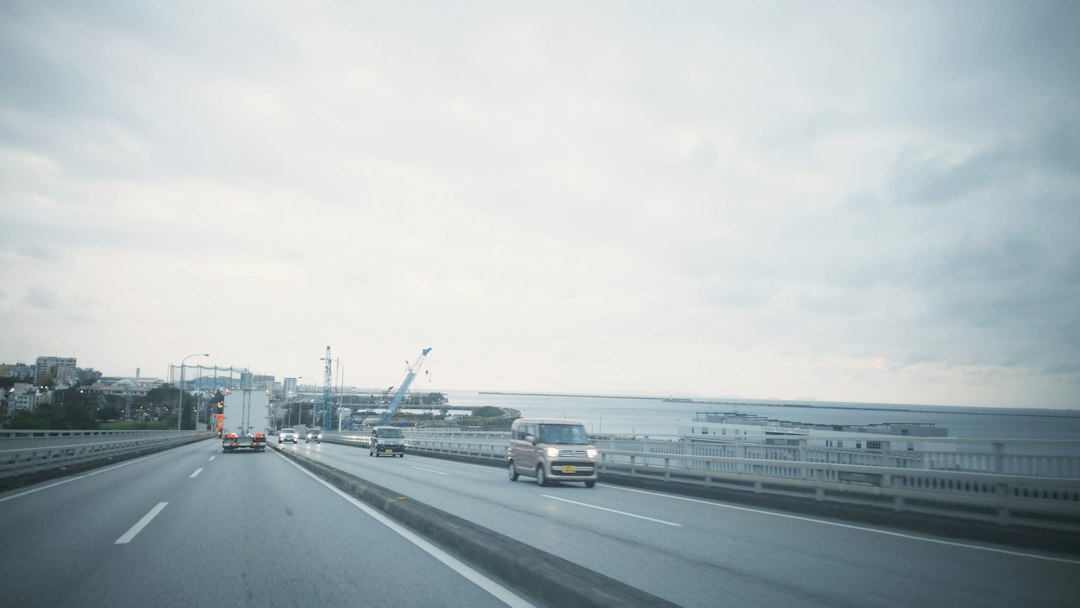
Budget 1 hour 45 minutes to 2 hours each way, and treat anything shorter as optimistic. The aquarium’s own access page says about two hours by car from Naha Airport via the Okinawa Expressway, and the road distance from central Naha is roughly 88 km. Mapping apps often quote 1h30 because they assume an empty Route 58, which does not exist between 7:30 and 9:00 on weekday mornings through Ginowan and Chatan.
Here’s the part that surprises people: the Okinawa Expressway is only 57.3 km long and it stops at Kyoda Interchange in Nago. The last 25–30 km to Motobu is ordinary two-lane road no matter what you pay in tolls. So the expressway buys you time on the Naha-to-Nago leg and nothing after that.
For a Cape Maeda or Onna hotel, the gap is even smaller: about 55 minutes via the expressway versus roughly 80 minutes on Route 58 along the coast. If you’re not in a hurry, the coast road is free and prettier.
Affiliate link: if you book through this, I may earn a small commission at no extra cost to you.
Full breakdown in my honest guide to driving and renting a car in Okinawa, and you can compare Okinawa car rental rates before you land.
Where should I base myself in Okinawa for a first trip?
For a first trip of four nights or fewer, split your stay: two nights in Naha, two nights in Onna or Chatan. One base for the whole trip is the mistake, because Naha and Motobu are two hours apart and you’ll spend a full day of your holiday just driving between them.
Naha gives you the monorail, the airport, late-night food and no need for a car on day one. Onna Village puts you inside 20 minutes of Cape Maeda and Manzamo, with the beach resorts. Chatan (the Mihama area) is the cheapest compromise: 40 minutes from the airport, walkable restaurants, and a seawall you can jog at 6am. Motobu and Nakijin only make sense if you want the aquarium at opening time and the Kouri Island area the same morning.
| Base | Drive to Naha Airport | Drive to Churaumi | Best for | The catch |
| Naha (Kokusai-dori area) | 15 min / monorail 13 min | 1h45–2h | Arrival and departure nights | No swimmable beach |
| Chatan / Mihama | 35–45 min | 1h20–1h40 | Food, walkability, mid-budget | Weekend traffic on Route 58 |
| Onna Village | 55–80 min | 60–75 min | Blue Cave, beach resorts | Few walkable restaurants |
| Motobu / Nakijin | 1h45–2h | 10–20 min | Aquarium at 8:30, Kouri Island | Very quiet after 20:00 |
The cost of getting this wrong is measured in hours, not yen: a single base in Naha for a five-day trip typically burns four hours of driving on aquarium day alone.
Is there a train in Okinawa, or do I need to rent a car?
There is exactly one rail line in the entire prefecture, and it does not leave the Naha area. The Yui Rail monorail runs 17 km from Naha Airport Station to Tedako-Uranishi in Urasoe, with 19 stations, end to end in about 37 minutes. A one-day pass costs ¥1,000 for adults. It’s genuinely useful for Kokusai-dori, Shuri Castle Park and Omoromachi, and useless for everything else.
Everything north of Urasoe is buses or a car. The Yanbaru Express Bus Airport Line connects the Naha city area with Nago, Motobu Port, Churaumi Aquarium and Nakijin Castle Ruins; the aquarium’s official access page puts the express bus journey at around three hours from Naha Airport, and services run roughly every two hours. That’s workable for one aquarium day, not for a whole itinerary.
Affiliate link: if you book through this, I may earn a small commission at no extra cost to you.
My blunt opinion: if you plan to swim, hike Yanbaru, or visit anything in Onna, rent a car. If you’re staying three nights in Naha eating and looking at castles, don’t bother — parking in central Naha is a tax on your holiday. Book an Okinawa car rental for the days you actually leave the city, and add a Japan eSIM (instant QR) so the navigation works from the arrivals hall.
What should I pack for Okinawa’s humidity, month by month?
Pack for humidity, not heat — the temperature in Okinawa is mild by Japanese standards, but the moisture is not. Long-term climate data for Naha puts June at the highest average relative humidity of the year (around 86%), with December the lowest (around 63%). July averages roughly 29.4°C, which is cooler than Osaka in August but feels heavier because the air barely dries out overnight.
What that means for your bag:
- Synthetic or merino shirts. Cotton stops drying between wears from May through September.
- A light rain shell, not an umbrella. Island rain arrives sideways with wind; umbrellas invert on the Sunabe seawall regularly.
- Two pairs of shoes, minimum, so one can dry.
- A long-sleeve rash guard. It solves sunburn and the reef-safe sunscreen argument at once.
- For December to February: a windproof layer. Naha’s January average high is about 19.5°C with sea temperature near 22°C, so it’s a jacket month, not a swimming month.
The packing error that costs real money is booking February and expecting beach weather. Hotel pools in Onna are often unheated then, and you’ll have paid resort rates for a view.
What time should I arrive at Churaumi Aquarium?
Arrive at 8:30 when the doors open, or after 16:00, and skip the middle of the day entirely. Standard hours are 8:30–18:30 with last entry at 17:30, extended to 20:00 or later on peak-season dates. Adult admission is ¥2,180, high school students ¥1,440, elementary and junior high students ¥710, and children under 6 enter free. Entry to the surrounding Ocean Expo Park — including the Dolphin Lagoon, Sea Turtle Pool and Manatee Pool — is free, and so is the parking.
Two things worth knowing before you plan the day. The old after-16:00 discount ticket was discontinued on 31 March 2023, so late entry saves you crowds but not yen. And the upper viewing course of the Kuroshio Sea tank has been reported closed since March 2026, with the main viewing window still open; check the official site before you build a morning around it.
Affiliate link: if you book through this, I may earn a small commission at no extra cost to you.
Buying Churaumi Aquarium tickets in advance mainly buys you the queue, which on a rainy August Sunday is the whole point.
Why do Blue Cave tours get cancelled, and how do I book so mine doesn’t?
Book the boat-entry version, not the stairs. The Blue Cave sits off Cape Maeda in Onna Village, and there are only two ways in: down the concrete stairs from the cape, or by boat from a nearby harbour. Operators put the odds of the stairs being open at roughly 60%, because entry is closed whenever sea conditions are judged unsafe. Boat access runs at around 90%. Same cave, same water, very different chance of actually getting in.
Practical details for Cape Maeda: the paid car park holds about 180 cars at ¥100 per hour and operates 07:00–19:00, there are coin showers at ¥200 per roughly two minutes, and coin lockers at ¥100. Bring cash; card acceptance is inconsistent at the barrier.
Timing matters too. The cave glows brightest when the sun is high, so a 09:00–11:00 slot beats a 15:00 one. North winds from December through February close the stairs far more often than summer does.
The scheduling fix nobody uses: book the cave for your second day on the island, not your last. If it’s cancelled you still have days left to rebook, instead of eating the loss on the way to the airport.
Is Kokusai-dori worth a whole evening in Naha?
Honestly, no — give it 45 minutes and move one street over. Kokusai-dori is about 1.6 km of souvenir shops, chain izakaya and shisa statues priced for visitors, and it’s the single most over-allocated block of time on first-timer itineraries I get sent. You should walk it once. You should not eat there.
Better within a ten-minute walk or a short monorail hop:
- Makishi Public Market — the rebuilt market on Ichiba-dori, a couple of minutes off Kokusai-dori. Go in the morning for fish and agu pork; upstairs stalls will cook what you buy downstairs.
- Tsuboya Yachimun Street — the pottery quarter, about 400 m southeast, quiet by 17:00 and the only place I’d buy a souvenir at full price.
- Sakaemachi Ichiba — a daytime market near Asato Station that turns into a warren of tiny izakaya after 18:00. Cash, small counters, no English menus at several places.
Naha at night is a local drinking city hiding behind a souvenir street. Spending your one Naha evening on the main drag is the cheapest mistake on this list, and also the most avoidable. More ideas in my 30 local picks for things to do in Okinawa.
When is the best time to visit Okinawa in 2026, and which weeks should I avoid?
Late October through early December is the most underrated window, and late April through June is the most commonly mis-booked one. Okinawa’s rainy season (tsuyu) usually runs from early May to around late June, and typhoon risk peaks in August and September. October still delivers sea temperatures in the mid-20s°C with far fewer people and lower hotel rates.
Weeks to avoid unless you have no choice:
- Golden Week (29 April – 5 May) — domestic demand spikes and rental cars sell out weeks ahead.
- Obon, mid-August — the same problem plus peak typhoon season.
- New Year, 29 December – 3 January — many small restaurants close, and it’s a jacket-and-wind month anyway.
Late February is my quiet favourite: the kanhizakura cherry blossoms open in Nago and Motobu roughly six weeks before mainland Japan, the air is dry by island standards, and you can drive Route 58 at midday without queuing. You won’t swim. You also won’t share Cape Manzamo with four tour buses.
Month-by-month detail lives in my guide to the best time to visit Okinawa.
What do I actually need to book before I land at Naha Airport?
Four things, in this order: the rental car, connectivity, the Blue Cave slot, and aquarium tickets. Everything else can wait until you’re here.
The rental car is the genuine bottleneck. Okinawa’s fleet is finite and it empties during Golden Week, Obon and the New Year period; booking four to eight weeks ahead for those dates is not caution, it’s arithmetic. Outside those windows, two weeks is usually enough. Confirm your licence situation before you pay: most non-Japanese drivers need an International Driving Permit under the 1949 Geneva Convention, and rental counters will refuse without it.
Connectivity second, because Okinawa navigation is address-and-map-code based and patchy paper signage will not save you. Third, the Blue Cave — boat slots on calm-weather mornings fill first. Fourth, aquarium tickets, which are a queue-skip rather than a discount.
- Okinawa car rental — essential for the islands and northern routes.
- Japan eSIM (instant QR) — no physical pickup, works the moment you land.
- Churaumi Aquarium tickets — skip the line at northern Okinawa’s iconic aquarium.
Affiliate link: if you book through this, I may earn a small commission at no extra cost to you.
Affiliate link: if you book through this, I may earn a small commission at no extra cost to you.
Affiliate link: if you book through this, I may earn a small commission at no extra cost to you.
What’s Easy to Get Wrong Here
The recurring errors are consistent enough to list flatly, without anecdote. First, assuming Okinawa is one compact island: the main island alone is about 100 km end to end, and the Okinawa Expressway covers only 57.3 km of it before stopping at Kyoda in Nago. Second, booking a single hotel for a week and then driving three to four hours on aquarium day. Third, expecting rail: the Yui Rail’s 19 stations cover 17 km around Naha and Urasoe, and nothing else.
Fourth, treating the Blue Cave as a fixed appointment when stairs entry is open only about 60% of the time. Fifth, arriving at Churaumi between 11:00 and 15:00, which is when tour buses and rental cars converge. Sixth, packing cotton for a June trip when average relative humidity in Naha peaks near 86%. Seventh, booking February for a beach holiday.
Daisuke’s call: Okinawa punishes bad geography more than bad taste — fix your drive times and your base, and the rest of the trip mostly fixes itself.
What I’d Do Differently Planning a First Okinawa Trip
If someone handed me a blank five-day itinerary tomorrow, I’d build it backwards from the two weather-dependent things and let everything else flex around them.
Day one: land, take the Yui Rail into Naha, skip the car entirely, eat in Sakaemachi. Day two: collect the car by 09:00, drive up to Onna, and hold the afternoon open. Day three: Blue Cave by boat in a 09:00 slot, with day four as the rebooking fallback. Day four: north to Motobu, at the aquarium gate for 08:30, Kouri Island and Nakijin Castle Ruins after lunch, sleep in Motobu instead of driving back. Day five: coast road south on Route 58, no expressway, return the car with two hours of buffer before the flight.
What I’d cut: the second Kokusai-dori evening, Okinawa World, and any itinerary that puts Churaumi and southern Okinawa on the same day. What I’d add: one unscheduled afternoon. Every trip here loses half a day to weather eventually, and the people who enjoy Okinawa most are the ones who planned for that instead of arguing with it.
FAQ
Do I need an International Driving Permit to rent a car in Okinawa?
Most visitors do. Drivers from countries party to the 1949 Geneva Convention need an IDP issued in their home country alongside their national licence, and rental counters at Naha Airport will decline the booking without it. Drivers from a small group of countries including Switzerland, Germany, France, Belgium, Monaco and Taiwan use an official Japanese translation of their licence instead.
Can I visit Churaumi Aquarium from Naha without a car?
Yes, but plan for a long day. The Yanbaru Express Bus Airport Line runs from the Naha city area to the aquarium stop, with the aquarium’s official access page citing about three hours by express bus, and departures roughly every two hours. The bus stop is around a ten-minute walk from the aquarium entrance.
Is the Blue Cave worth doing if I can’t swim well?
Generally yes, because standard snorkel tours use life jackets and many operators accept participants from age 3. The boat-entry option avoids the staircase and the surge at the water’s edge, which is where nervous swimmers struggle. If you’re unsure, book the boat version and say so at booking.
How many days do I need for a first trip to Okinawa’s main island?
Five days is the honest minimum for Naha plus the west coast plus Motobu, and four works if you split your hotel between Naha and Onna. Three days means choosing between the north and the south, not doing both. Anything under three is a Naha city trip, which is fine, but skip the rental car.
About Me
I’m Daisuke. I’m born and raised in Okinawa (34 years and counting), and I write okinawa-insider.com in English because most of the advice visitors find here is either translated brochure copy or a decade out of date. I drive these roads for work and family, not for content. When I think something is overrated, I say so, and when a price or a timetable changes I update the article rather than leaving it to rot.
Plan Your Okinawa Trip
These are affiliate links. If you book through them, I may earn a commission at no extra cost to you.
- Okinawa car rental — essential for the islands and northern routes.
- Churaumi Aquarium tickets — skip the line at northern Okinawa’s iconic aquarium.
- Japan eSIM (instant QR) — no physical pickup needed, works on arrival.
Prices and opening hours quoted in this article come from official operator listings as of 2026 and change without notice. Check the official site before you travel.
Read Next: Spoke Guides
- Driving and renting a car in Okinawa: the honest guide
- The best time to visit Okinawa, month by month
- Things to do in Okinawa: 30 local picks
Update Log
- 2026-09-28: First published.