Split the five days three-and-two: two nights based in Naha or the south, then three nights up on the Onna–Motobu side, and you delete roughly four hours of pointless back-and-forth driving from the trip. I’m Daisuke, born and raised in Okinawa (34 years and counting), and I run okinawa-insider.com. The single most common mistake I see in reader itineraries is five nights booked in Naha followed by a 95 km sprint north to Churaumi and back in one day. This route fixes that, with honest drive times, the actual toll math, and a rain swap for every day.
This post contains affiliate links. If you book a tour or buy through them, I may earn a commission at no extra cost to you.
What does a five-day Okinawa itinerary actually look like, day by day?
Here’s the shape that works: Day 1 south (Naha), Day 2 south (Nanjo and Itoman), Day 3 drive north and stop on the Yomitan–Onna coast, Day 4 Motobu and Churaumi, Day 5 Nakijin or Kouri, then back to the airport. Two nights in the south, three nights north of Yomitan.
- Day 1: Land, collect the car, Shurijo Castle Park (paid area ¥400 adults), dinner in Naha.
- Day 2: Nanjo and Itoman — Gyokusendo cave inside Okinawa World (¥2,000 adults, official combined ticket), the Cornerstone of Peace at Mabuni.
- Day 3: Drive north up Route 58, stop at Cape Zanpa and Cape Manzamo (¥100 admission), check in around Onna or Nago.
- Day 4: Churaumi Aquarium plus Bise fukugi tree lane, 10 minutes up the coast.
- Day 5: Kouri Island or Nakijin Castle ruins, then the 95 km run back to Naha Airport.
Affiliate link: if you book through this, I may earn a small commission at no extra cost to you.
The whole thing hinges on Day 3 being a travel day with sightseeing baked into it, not a wasted transfer. You need a car for this — the Okinawa car rental counters at Naha Airport run a shuttle to off-site lots, so budget 45 minutes from baggage claim to actually driving.
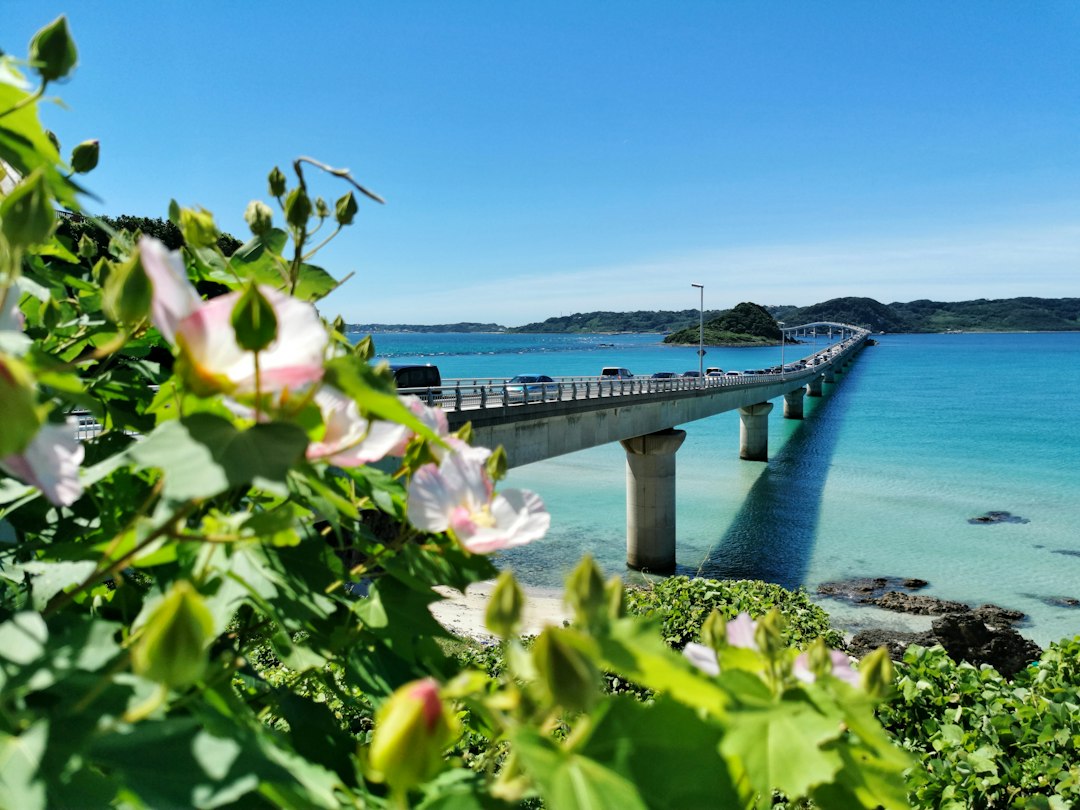
Where should I split my nights between north and south Okinawa?
Two nights in Naha, three nights somewhere between Onna Village and Motobu Town. That’s the split. The alternative most people book — five nights in Naha — costs you about 190 km of driving on your Churaumi day alone, and you’ll spend the last 90 minutes of it in the dark on Route 58.
Naha makes sense for the first two nights because you land there, the southern sites are all within 30 km, and you can eat and drink without driving. Kokusai-dori is fine for one evening and genuinely tiring after that; I’d rather send you to the Sakaemachi market arcade a few minutes from Asato monorail station.
For nights three to five, Onna Village puts you roughly halfway: about 50 km from the airport and about 55 km from Churaumi. Nago or Motobu shaves another 25 minutes off your aquarium morning but leaves you further from everything else. Resort prices on the Onna strip climb steeply from late July through August, and drop noticeably in November.
If you’re weighing the two bases in detail, I wrote a longer comparison here: Naha vs Onna: where to stay in Okinawa.
Which day should I give Churaumi Aquarium, and what time should I arrive?
Give Churaumi your fourth day, and arrive either at 8:30 opening or after 15:30 — not at 11:00, which is when every tour coach from Naha unloads. The aquarium’s standard hours are 8:30 to 18:30 with last entry at 17:30, and adult admission is ¥2,180 (official Ocean Expo Park pricing), ¥1,440 for high school students, ¥710 for elementary and junior high, free under 6.
Here’s the counter-intuitive part: the late slot is better than the early one for most people. Coach tours have to leave Motobu by mid-afternoon to get back to Naha, so the Kuroshio Sea tank — 7,500 tonnes of water, whale sharks, manta rays — thins out considerably after about 16:00. You still get the full two to three hours you need, and Ocean Expo Park itself is free, including the dolphin lagoon and the manatee pool.
Affiliate link: if you book through this, I may earn a small commission at no extra cost to you.
Buy ahead. Window queues on Golden Week days and in mid-August are the worst part of the visit, and discounted Churaumi Aquarium tickets scan straight through at the gate.
How long are the drives really, and is the expressway toll worth paying?
The Okinawa Expressway runs 57.3 km from Naha IC to Kyoda IC and costs ¥1,610 cash or ¥1,040 with an ETC card for a standard vehicle, covering that stretch in about 43 minutes at the 80 km/h limit. It is worth it exactly once in this itinerary: your Day 5 return to the airport, or if you insist on a Naha–Churaumi day trip.
What surprises people is that the expressway ends at Kyoda. There is no expressway north of Nago. The final 30 km from Kyoda IC to the aquarium is ordinary two-lane road and takes 35 to 40 minutes no matter what you paid.
| Leg | Approx. distance | Typical off-peak drive time | Toll |
|---|---|---|---|
| Naha Airport → Onna (Route 58 coastal) | 50 km | 75–90 min | None |
| Naha Airport → Onna (expressway to Ishikawa IC) | 55 km | 60–70 min | Partial |
| Naha IC → Kyoda IC (full expressway) | 57.3 km | 43 min | ¥1,610 / ¥1,040 ETC |
| Kyoda IC → Churaumi Aquarium | 30 km | 35–40 min | None |
| Onna → Churaumi Aquarium | 55 km | 70–80 min | None (Route 58/449) |
| Naha → Nanjo / Itoman (southern loop) | 25–30 km | 40–50 min | None |
Rent the ETC card from the rental desk if it’s offered at around ¥330 per day. Without it you’re queuing at a cash booth.
What should Day 1 look like if I land in the afternoon?
Do not try to reach the north on arrival day. Most international arrivals into Naha land between 13:00 and 18:00, and after the rental shuttle and paperwork you’re realistically on the road by 16:00. Route 58 between Naha and Ginowan gridlocks from roughly 17:00 to 19:00 on weekdays.
So keep Day 1 inside Naha. Shurijo Castle Park is the obvious anchor — adult admission to the paid inner area is ¥400, and the reconstruction of the main hall after the 2019 fire is itself the thing to look at right now, with viewing walkways over the carpentry work. It’s a 15-minute walk from Shuri monorail station, uphill.
Then park the car for the night. Naha hotel parking commonly runs ¥1,000 to ¥1,500 per 24 hours, and drinking and driving in Japan means a 0.00% limit with license revocation, so I’d genuinely rather you used the Yui Rail monorail after dark. A 24-hour pass is ¥800, 48-hour ¥1,400.
For dinner, Sakaemachi’s alley izakayas open around 17:00 and run late. Awamori, grilled fish, no reservations needed on a Tuesday.
Is the southern half of Okinawa worth a whole day?
Yes, but for history rather than beaches. The southern tip of the island is where the 1945 ground battle ended, and the Okinawa Prefectural Peace Memorial Museum at Mabuni in Itoman is the most serious museum on the island. Adult admission is ¥300. Outside it, the Cornerstone of Peace carries the names of everyone who died in the battle, regardless of nationality, cut into black granite panels.
Pair it with Gyokusendo, the 890-metre limestone cave inside Okinawa World in Nanjo (adult combined admission ¥2,000, official site). The cave is cool and humid year-round and the floor is wet — proper shoes, not resort sandals. The Eisa drum performance upstairs is scheduled several times daily.
Add Cape Chinen Park for the view over Kudaka Island if you have an hour spare. The southern roads are narrow prefectural routes at 40 to 50 km/h, so mapping apps underestimate these legs by about 15%.
If two days in the south sounds like a lot, my three-day Okinawa itinerary compresses the same ground differently.
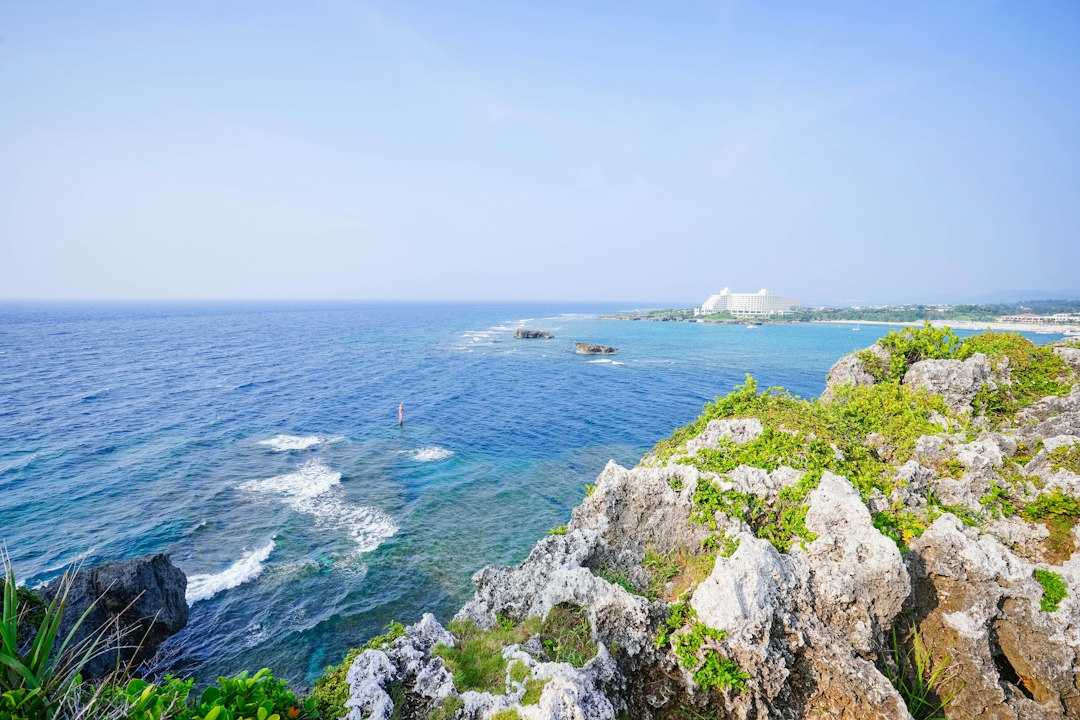
What’s worth stopping for on the Yomitan and Onna coast on Day 3?
Treat Day 3 as a slow 50 km with three stops rather than a transfer. Leaving Naha at 09:00 gets you to Onna by mid-afternoon with everything seen.
Cape Zanpa in Yomitan comes first: a white lighthouse on a flat limestone shelf, free to walk, and the parking lot fills on summer weekends. Yomitan is also the pottery village — Yachimun no Sato has kilns and shops, most closed Wednesdays, so check before you detour.
Cape Manzamo in Onna charges ¥100 for adults and takes 25 minutes to walk properly. The elephant-trunk rock formation is the postcard shot; the better part is the cliff edge path looking north.
Skip the roadside pineapple and shell shops. They’re identical, and the pineapple is cheaper at a JA farmers market.
Water clarity on this coast is at its best from late April through June, before the August typhoon peak churns things up. If you want reef time, book a boat rather than swimming off the hotel beach, which is netted and shallow.
Should I add a Kerama Islands day trip to only five days?
Only if you’re willing to give up one of the two southern days. The Kerama chain is genuinely the best water within reach of Naha — Kerama Blue is not marketing language, it’s a documented visibility phenomenon, and the islands became a national park in 2014.
Ferries leave from Tomari Port in Naha. For Zamami, the high-speed Queen Zamami runs roughly 50 to 70 minutes; the slower car ferry takes closer to two hours. Tokashiki’s fast boat is about 35 minutes. Sailings are cancelled outright in strong wind, which happens often from September through November, and summer weekend sailings sell out days ahead.
Affiliate link: if you book through this, I may earn a small commission at no extra cost to you.
The realistic version for a five-day trip is a guided boat day out of Naha, because it handles the ferry booking and the gear. A Kerama Islands full-day snorkeling trip eats the whole day, dock to dock, so slot it as your Day 2 and move the Peace Memorial Museum to a rainy slot.
Honestly, if reef snorkelling is your priority over aquariums and castles, do Kerama and cut a northern day.
What do I swap in on each day if it rains?
Okinawa’s rainy season usually runs from around May 10 to late June, and September brings the typhoon peak, so build swaps in rather than hoping. Naha records well over 2,000 mm of rain a year (Japan Meteorological Agency normals), and most of it arrives in short heavy bursts rather than all-day drizzle.
- Day 1 (Naha): Shurijo’s inner buildings and the Okinawa Prefectural Museum and Art Museum in Omoromachi are both fine in rain.
- Day 2 (south): Gyokusendo cave doesn’t care about weather. Swap the Cape Chinen viewpoint for more museum time.
- Day 3 (transfer): Trade Cape Zanpa for the Yachimun pottery workshops, or Ryukyu Mura’s indoor craft demonstrations.
- Day 4 (Churaumi): Already indoors. Bad weather actually makes this the best possible day for it.
- Day 5 (Kouri/Nakijin): Kouri Island in rain is pointless — go to Nago Pineapple Park (¥1,500 adults) or Orion Happy Park instead.
Affiliate link: if you book through this, I may earn a small commission at no extra cost to you.
Typhoon warnings above a certain level close bridges, including Kouri Ohashi, and ground flights. If a named storm is 48 hours out, move your Churaumi Aquarium tickets forward and do your outdoor day early.
Can I run this five-day route without renting a car?
You can, but you’ll lose about half your stops. The Yanbaru Express Bus airport line connects Naha Airport to Nago, Motobu Port and the Churaumi Aquarium stop, with fares around ¥2,000 to Nago Bus Terminal and roughly ¥2,300 to Motobu Port. Journey time to the aquarium runs a little over two hours, and departures are spaced about every two hours, not every 20 minutes.
What that means in practice: Naha and the monorail corridor are easy, Churaumi is doable, and everything in between — Cape Zanpa, Yachimun no Sato, the Nanjo coast — becomes an expensive taxi or a written-off afternoon. Bus stops for Ocean Expo Park are about a 10-minute walk from the aquarium entrance.
Affiliate link: if you book through this, I may earn a small commission at no extra cost to you.
If you want the no-car version to work, base four nights in Naha and one night in Motobu, and accept a narrower trip. Otherwise, a compact Okinawa car rental for days three to five only is a decent compromise: monorail in Naha, wheels for the north.
Bring your International Driving Permit in the 1949 Geneva Convention format. Rental desks will refuse you without it.
What’s Easy to Get Wrong Here
Four errors account for most ruined five-day Okinawa trips, and all four are booking decisions, not driving decisions.
First, basing all five nights in Naha. It converts Day 4 into a 190 km round trip and leaves you no margin for the aquarium running long.
Second, assuming the expressway solves distance. It ends at Kyoda IC, 30 km short of Churaumi, and the detour inland to reach an on-ramp from the Onna coast can cost 15 minutes of the time it saves.
Third, arriving at Churaumi around 11:00. Standard hours are 8:30 to 18:30 with last entry at 17:30, and the middle of that window is the coach-tour window.
Fourth, underestimating Route 58. It’s the island’s main artery and the Naha–Ginowan stretch backs up badly from 07:30 to 09:00 and 17:00 to 19:00.
Daisuke’s call: If you only change one thing about your booking, move three of your five nights north of Yomitan.
What I’d Do Differently on a Second Five-Day Trip
I’d stop pretending Day 5 can hold both Nakijin and Kouri and a relaxed airport run. Nakijin Castle ruins (adult admission ¥600) deserve 90 minutes on their own, and the drive from Motobu back to Naha Airport is 95 km — realistically two hours plus, more if you hit the afternoon build-up around Ginowan. Trying to add Kouri Island on top means rushing all three.
I’d also stop scheduling beach time as a standalone block. In a five-day trip, swimming works far better as 45 minutes tacked onto an existing stop than as a dedicated afternoon that a wind shift can kill.
And I’d book the aquarium for late afternoon rather than opening. Morning slots feel virtuous and then you queue behind the same coaches you were trying to beat.
A fair warning: five days is tight for anyone who also wants Miyako or Ishigaki. Those are separate flights and separate trips. If you have longer, the seven-day Okinawa itinerary is where the outer islands start to fit.
How much should I budget for five days in Okinawa?
Fixed costs are easier to pin down than hotels. Here’s what the route itself costs a couple, excluding accommodation and food.
- Rental car, compact, five days: roughly ¥25,000–45,000 depending on season, plus ¥330/day for an ETC card.
- Fuel: the full route runs about 350 km, so one tank plus change.
- Expressway tolls used once each way: ¥1,610 cash or ¥1,040 ETC per full run, Naha IC to Kyoda IC.
- Churaumi Aquarium: ¥2,180 per adult.
- Okinawa World with Gyokusendo: ¥2,000 per adult.
- Shurijo Castle Park: ¥400. Cape Manzamo: ¥100. Peace Memorial Museum: ¥300. Nakijin Castle: ¥600.
Admissions here are cheap by Japanese standards. The two line items that swing your total are the car and the Onna resort rate, which in August can be triple a November rate for the same room. Late April to early June and all of November are the pricing sweet spots, and Naha averages around 29°C in July (JMA climate normals) if heat is a factor for you.
Affiliate link: if you book through this, I may earn a small commission at no extra cost to you.
A guided water day such as a Kerama Islands full-day snorkeling trip is the one splurge I’d defend.
Frequently asked questions
Is five days enough to see Okinawa’s main island properly?
Five days covers the main island’s south, central coast and Motobu peninsula at a reasonable pace if you split your nights. It is not enough to add Miyako, Ishigaki or Kume, which require separate domestic flights of 45 to 60 minutes from Naha.
Do I need to book Churaumi Aquarium tickets in advance?
No reservation is required and tickets are sold at the gate, but advance purchase lets you skip the ticket window, which matters during Golden Week and mid-August. Adult admission is ¥2,180, with standard hours of 8:30 to 18:30 and last entry at 17:30.
What’s the best month for a five-day Okinawa trip?
Late April to early June and November are the strongest windows — warm enough for water, outside the roughly May-to-late-June rainy season peak and the August-September typhoon peak. Late January is a specific exception worth knowing: the Nakijin Castle cherry blossoms open then, months before mainland Japan.
Can I drive from Naha to Churaumi and back in one day?
Physically yes, and it’s about 95 km each way, roughly two hours per direction using the expressway to Kyoda IC. But you’ll spend four hours in the car for a three-hour aquarium visit, which is exactly what this split-night itinerary exists to avoid.
About the author
I’m Daisuke, born and raised in Okinawa (34 years and counting). I write okinawa-insider.com in English because most of what’s published about my island in English is recycled from the same three press releases. I drive these roads for ordinary reasons, not for content, and I’d rather tell you a place is overrated than sell you a ticket to it.
Plan Your Okinawa Trip
These are affiliate links. Booking through them costs you nothing extra and helps keep this site running.
- Okinawa car rental — essential for the islands and northern routes.
- Churaumi Aquarium tickets — skip the line at northern Okinawa’s iconic aquarium.
- Kerama Islands full-day snorkeling — ferry to the Kerama chain, the best reef day trip from Naha.
Affiliate link: if you book through this, I may earn a small commission at no extra cost to you.
Affiliate link: if you book through this, I may earn a small commission at no extra cost to you.
Affiliate link: if you book through this, I may earn a small commission at no extra cost to you.
Prices quoted in this article are official listed rates current at the time of writing and change without notice. Check the operator’s own site before you travel.
Read Next: Spoke Guides
- Seven days in Okinawa, including the outer islands
- Three days in Okinawa: the compressed version
- Where to stay: Naha vs Onna
Update Log
- 2026-09-24: First published.